
Please continue to visit this page for shutdown updates as the situation continues to evolve. Additions will be marked as New.
UPDATE (11/12): Shutdown Ended by Congress on Day 43
Congress Agrees on Deal to Reopen Federal GovernmentNew
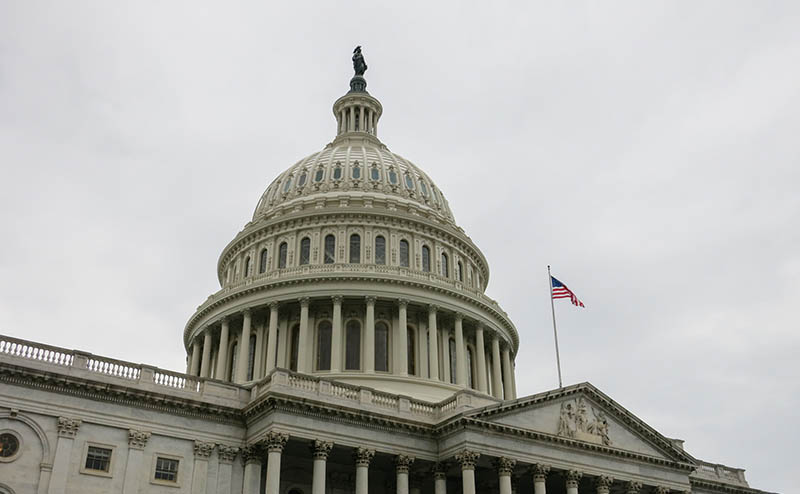
Today, the House of Representatives passed a deal to reopen the federal government after 43 days, finally bringing the longest government shutdown in history to an end. The move comes after the Senate voted on Monday on an agreement for another short-term continuing resolution (CR) that will fund most of the government through January 30, 2026, and several agencies throughout the remainder of the 2026 fiscal year.
The CR resumes and extends several health care policies of note for emergency medicine, including extensions of:
- COVID-19 public health emergency-era telehealth flexibilities;
- Ground ambulance add-on payments under Medicare;
- Geographic Practice Cost Index (GPCI) work floor;
- Increased funding for continued implementation of the No Surprises Act; and,
- Medicare Acute Hospital-at-Home (HAH) program, among others.
Once the CR is signed into law by the President, the Centers for Medicare & Medicaid Services (CMS) is soon expected to issue updated guidance for physicians and other health care providers with respect to claims that have been held throughout the shutdown or that will need to be reprocessed. ACEP will provide updates to our members once the new guidance is issued by CMS.
Senate Passes Funding Package
The Senate on Monday night passed legislation in a 60-40 vote to fund the government through January 30, 2026--the legislation next will move to the House for a final vote, which if successful will bring an end to the shutdown.
Medicare Payment Holds Lifted
CMS has reversed course and announced it has instructed the Medicare Administrative Contractors (MACs) to lift their holds on, and process for payment, the following claims for services rendered on or after October 1:
- All Medicare Physician Fee Schedule;
- Ground ambulance transport;
- Federally Qualified Health Centers (FQHC); and,
- Telehealth claims definitively for behavioral and mental health services.
Background
Several funding extensions for programs expired on September 30, 2025 when Congress was unable to reach a deal on funding the government, including the 1.0 GPCI floor for physician work as well as the telehealth waivers (more below) that date back to the COVID-19 pandemic. As a result, following the start of the shutdown, CMS had instructed the MACs to hold indefinitely claims for Medicare fee for service payments related to telehealth, and those from emergency physicians (and other clinicians) in a geographic area with a GPCI work floor below 1.0. As the shutdown continues with little end in sight, emergency physicians in these affected localities would have experienced significant cash-flow impacts since the hold applied to almost all of their Medicare FFS billings.
Medicare Telehealth
The temporary telehealth waivers that have been in place in Medicare since the COVID-19 public health emergency (PHE) have lapsed, meaning that the restrictions in place pre-COVID have returned for non-behavioral or mental health services. These include prohibiting many telehealth services provided to beneficiaries in their homes and outside of rural areas, and hospice recertifications that require a face-to-face encounter. The ability to provide audio-only telehealth services has also expired.
Seniors reliant on this care who are suddenly unable to access it may now instead go to the emergency department, potentially resulting in increased patient loads.
Additionally, emergency physicians who provide telehealth services themselves should be aware that the Medicare telehealth rules will revert to their pre-PHE state and should adjust accordingly. It is important to note here that Medicare Advantage plans (which cover more than half of the total Medicare population) can still employ the PHE-era flexible Medicare telehealth coverage policies, as well as physicians in some ACOs. The new restrictions the shutdown will bring only apply to traditional Medicare. Thus, as a Medicare beneficiary, coverage of telehealth services could differ depending on what part of Medicare program they are enrolled in. This will only further confusion among clinicians in Medicare and Medicare beneficiaries.
Medicaid
CMS has sufficient funding for Medicaid to fund the first quarter of FY 2026, based on the advance appropriation provided for in the Full-Year Continuing Appropriations and Extensions Act, 2025. A shutdown that goes beyond the first quarter of FY 2026 could result in delayed payments to states, although that is unlikely (the longest shutdown to date was 35 days). CMS is unlikely to approve state plan amendments and waivers during a government shutdown, although review can occur in the background.
Public Health and Other Federal Services
Other federal essential services are not expected to be affected, and ACEP is reviewing guidance from federal agencies, including that recently posted by the U.S. Department of Health & Human Services, which states that the following agency activities will continue during a shutdown:
- The National Institutes of Health (NIH) will continue research and clinical activities to protect human life or government property.
- The Centers for Disease Control and Prevention (CDC) will continue monitoring for disease outbreaks.
- The Food and Drug Administration (FDA) will continue supporting food and medical product recalls and monitoring and responding to outbreaks related to foodborne illnesses, and will continue to exempt activities to support drug and medical device reviews.
- Payments to eligible states for the Children's Health Insurance Program (CHIP).
- Federal Marketplace activities.
- Federal Independent Dispute Resolution claims (under the No Surprises Act) will continue to be processed and adjudicated.
Federal Employment
Formal reductions in force (RIFs) began on October 10 across parts of the federal government, including HHS. Media and agency confirmations indicate that CDC, SAMHSA, and ASPR were among the HHS components affected. CDC issued roughly 1,300 layoff notices, more than half of which were rescinded over the weekend, but hundreds of staff remain impacted; preparedness and biodefense functions (including some ASPR roles) were hit particularly hard. Other departments are also reporting layoffs as the shutdown continues.
Details continue to shift as agencies sort out errors and operational needs during the shutdown. Standard shutdown exemptions (e.g., activities necessary for life and safety or the protection of property) still apply, but RIFs are distinct from furloughs and do not automatically track those exemptions.
On 10/15/25, a federal judge issued an injunction temporarily blocking the administration from carrying out federal employee layoffs at most agencies. The administration is expected to appeal the decision in the coming days, so the situation in terms of these and potential future RIFs is increasingly fluid.
What Is ACEP Doing?
ACEP continues to educate members of Congress on the specific implications a shutdown will have on emergency care and their constituents and is urging a prompt resolution to government funding negotiations.
Following repeated misleading assertions from Congressional leaders that the government has been shut down due to demands for federal funding of free emergency care for undocumented immigrants, ACEP released a statement reaffirming that emergency physicians care for everyone who needs help, regardless of of insurance status, immigration status, or ability to pay.
We are actively monitoring congressional negotiations and will provide guidance to ACEP members as additional information becomes available.
What Happens After the Shutdown?
In previous government shutdowns, Congress has retroactively restored funding and any lapsed policies up to the start of the shutdown. As of right now it is unclear how long any government shutdown may last, how exactly it would be resolved, and, following that, the extent of retroactive relief, if any.