 American College of Emergency Physicians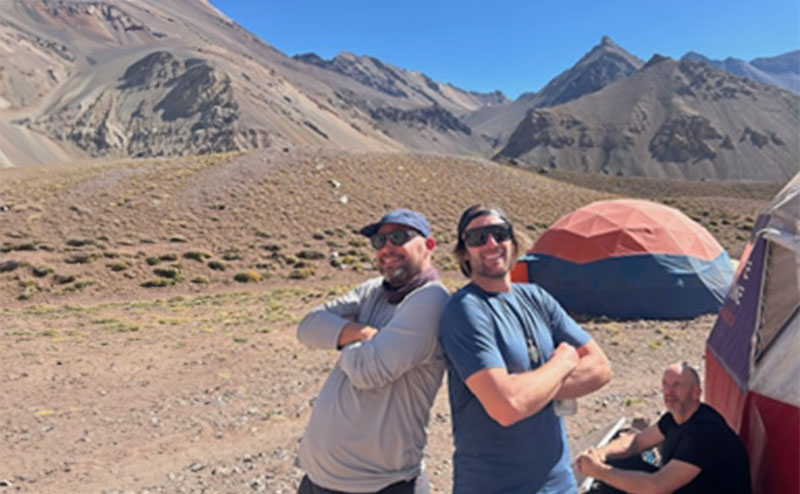

Decision-Making Tools in Wilderness Medicine
Pictured above: Having each other’s backs, buddy systems, and a good support network are all great ways to avoid mistakes. (UVM Wilderness Medicine/Aconcagua Base Camp, January 2026)
Marc Cassone, DO, FACEP, FAWM, DiMM
Chair-Elect, ACEP Wilderness Medicine Section
“Slow is smooth and smooth is fast”, “Resuscitate before you intubate”, “When you hear hoofbeats...”
Emergency Medicine is full of aphorisms. In the often fast-paced, high-stakes environment of emergency departments, aphorisms and other heuristics are the mental shortcuts we use to help with cognitive unloading. Especially when the superstitions we use to bring order to chaos fail us:
“Don’t say the Q-word”, “Black/White Clouds”, “Code Cart here to ward off bad spirits…”
Wilderness enthusiasts, expeditioners, and guides when facing tough decisions in dynamic outdoor environments often also rely on shorthands to make good decisions:
“Getting to the top is optional. Getting down is mandatory.” “There is no such thing as bad weather, just inappropriate clothing.”
What happens when emergency medicine physicians work in austere environments- when there are even less resources and feedback (from colleagues, labs, imaging) and the consequences of our decisions can become even more consequential? Here I explore some decision-making heuristic tools and traps most useful for work as wilderness medicine docs:
1. “Familiar view? Assume it’s true—then double-check what you can do.”: Pattern Recognition
On a frigid paddling trip, a paddler presents with the -umbles (grumbles, mumbles, fumbles, and stumbles). Recognizing patterns of signs and symptoms (especially when there is a lack of advanced diagnostics) are key shortcuts for physicians to quickly recognize and treat wilderness pathologies. However, this tool relies on a depth of prior experiences and can be prone to situational differences as well as availability and anchoring biases (see below). Was that hypothermic person also hypoglycemic?
2. “We have an outbreak of Summit Fever.”: Team Dynamics
WM physicians are essential members of a team and just as prone to the groupthink and goal-oriented nature of many outdoor adventurers (attaining a summit, destination, cutoff time, research goal). However, they also remain advocates for the health and safety of the team. Clear communication on expectations and goals (e.g., turnaround times, decision making hierarchies, risk thresholds) are essential both before and after events. The STOP mnemonic can be a starting point for hairy situation discussions.
3. “Skip the list, miss the risk.”: Checklists
Checklists have become de rigueur in modern medicine and wilderness medicine shouldn’t be any different. They help avoid errors and help unload mental tasks. While standardization is difficult in wilderness medicine, pre-departure medical checks, first aid medical checklists, emergency evacuation checklists certainly have a key role in expedition success. However, despite Dr. Gawande’s assertions, people aren’t planes, and checklists can’t cover all situational outcomes- physicians should be aware of their limitations and when to break from the script.
4. “You don’t fall on the pitch- you fall on the anchor.”: Anchoring Bias
When pitching possible diagnoses and treatments, it’s important to avoid premature closure. Wilderness medicine physicians should take all the limited information they have available into account, not underestimate the importance of frequent reassessments, and not be afraid to pivot. Does the heat stroke patient actually have a missed head trauma or HACE? While the ultimate diagnoses may not be possible, important decisions like whether or how to evacuate a patient (walk out? helicopter?) are critical.
5. “Focus on the cliffs and miss the cracks.”: Availability Bias
As the former Column Editor of the WMM’s Breaking News Column, I have become too aware of all the newsworthy ways someone can get hurt or killed in the wilderness: quicksand, avalanches, lightning strikes, tree falls, shark bites... These stories can affect how we plan and equip ourselves for expeditions. While being prepared (in all senses of the term) for various outcomes is key- WM physicians shouldn’t forget that what may seem benign in the ED can also be trip-critical in austere environments (blisters, UTIs, allergic reactions, corneal injuries). Don’t miss the trees for the forest…
6. “Check your own pulse first.”: Fatigue Awareness
Austere medicine physicians are exposed to all sorts of occupations hazards- physical, mental, and emotional exhaustion, isolation, and burnout are not uncommon. This can be true on both single day events or multi-month expeditions. All of which can affect judgment and clinical skills. Scheduled rest, buddy checks, self-care (hydration, nutrition, sleep), and open communication are key to avoiding poor decision-making mindsets. Resources like the Responder Alliance’s Stress Continuum are useful communication tools. First, you must take care of yourself so you can take care of others!