 American College of Emergency Physicians

Summer Newsletter 2026
Pediatric Emergency Medicine Section, ACEP... A professional home for PEM healthcare professionals
Our Mission & Vision
We advance quality pediatric emergency education and promote the interests of emergency physicians—whether they practice in children's hospitals, community emergency departments (EDs), or resource-limited settings. We aim to lead through education, advocacy, and collaboration. A professional home for healthcare professionals who care for children in emergencies.
Leadership, PEM Section Officers & Staff
Chair: Shiva Kalidindi, MD
Immediate Past Chair: Cristina M. Zeretzke-Bien, MD
Chair-Elect: Sherita Holmes, MD
Councillor: Paula Whiteman, MD
Alternate Councillor: Sarah Cavarello, MD
Secretary & Newsletter Editor: Kendall Luyt, MD
Content Editors: Roxanne Cheung, MD, Ruth Hwu, MD, Yiraima Medina-Blasina, MD
ACEP Staff Liaison: Stephanie Wauson
Leadership: Message from the Chair
Dear PEM Section Members,
Welcome to the Summer Edition of the ACEP Pediatric Emergency Medicine (PEM) Section Newsletter.
As we move through an exciting and productive year, I want to extend my sincere gratitude for your continued engagement and contributions to our section. Thanks to the dedication of our members, we continue to make meaningful progress in delivering high-quality pediatric emergency medicine education while advancing the interests of emergency physicians who care for children.
Over the past quarter, our section has successfully reintroduced the PEM Section Newsletter, launched an outstanding E-Images Competition, and hosted three well-attended webinars focused on supporting learners and early-career physicians pursuing careers in pediatric emergency medicine. One of the highlights of this quarter was our E-Images Competition, which received more than 30 submissions showcasing remarkable clinical images and educational value. We are grateful to everyone who participated and shared their expertise. The competition winners will be announced during the PEM Section Annual Meeting at ACEP26 in Chicago on October 6, 2026. We hope you will join us as we celebrate the outstanding work of our members.
Our educational programming also continued to thrive with three successful webinars designed to support career development in pediatric emergency medicine:
- PEM Without Limits: Exploring Diverse Career Paths. June 1, 2026
- EM to PEM Career Path. June 5, 2026
- Match Made in PEM: How to Build a Standout Fellowship Application. June 29, 2026
These sessions provided practical guidance, mentorship, and inspiration for physicians at various stages of their careers, reflecting our commitment to fostering the next generation of PEM leaders.
Looking ahead, we invite you to join us for two outstanding upcoming webinars:
Upcoming PEM Section Webinars
The Three P's: Passion, Purpose, and Presence
How to Reengage Your Mindset for a Fulfilling Career
Speaker: Dr. Rodrick Lim, MD, Chair, IFEM Pediatric Emergency Medicine Committee
September 8, 2026 | 11:00 AM – 12:00 PM CST
New-Onset Seizure in Pediatrics
Speakers: Drs. Andrade and Winnsett
November 10, 2026 | 11:00 AM – 12:00 PM CST
These programs continue our mission of delivering relevant, practical, and engaging educational opportunities for our members.
As always, we are deeply grateful for your involvement and support. The strength of our section comes from the passion, expertise, and dedication of its members. Whether you participate in educational programs, contribute scholarly work, mentor colleagues, or advocate for pediatric emergency care, your efforts help advance our shared mission.
I look forward to seeing many of you in person at our PEM Section Annual Meeting during ACEP26. Let us connect, engage, celebrate our accomplishments, and continue building an even stronger pediatric emergency medicine community.
Thank you for all that you do.
Warm regards,
Shiva Kalidindi, MD
Chair, ACEP Pediatric Emergency Medicine Section
At-a-Glance: Calendar & Opportunities
Stop by the Pediatric Section table at the Wine and Wander Welcome Party on October 5 in Chicago, Illinois from 4:30-6:00 pm. Enjoy DJ music, sip wine, and sample light bites while you network with your colleagues.
Join us for our annual Pediatric Emergency Medicine Section Meeting on October 6, 2026, from 3:00–5:00 PM in Chicago, Illinois at MPCC Level 1, Room W196B. This is a wonderful opportunity to connect with colleagues, hear updates from section leadership, and celebrate the EMage winners.
The section welcomes practical, educational articles that can help others in pediatric emergency medicine. Case reports, evidence-based articles, quick reference guides, or core topic reviews in our suggested topic list will be considered. Every submission will be reviewed by our team, and articles will be published based on how relevant, useful, and aligned they are with the Pediatric Emergency Medicine Section’s goals. Article requirements can be found online, and your article can be submitted on our section website here.
Stephanie Wauson
Pediatric Emergency Medicine Staff Liaison
Educational Center, Hot Topics in PEM
Vitamin K Refusal and the ED.
Paula Whiteman, MD, FACEP, FAAP
Associate Professor of Emergency Medicine, Cedars-Sinai Medical Center
Councilor, PEM Section, ACEP
Right now, there is a developing, but preventable public health crisis unfolding in front of us.
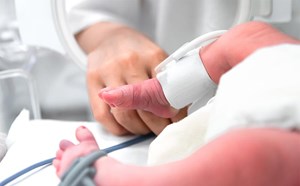
Due to rampant misinformation in astounding numbers, parents are refusing not only vaccines for their children, but vitamin K for their newborn infants at birth. Vitamin K deficiency in newborn infants puts them at risk for life-threatening bleeds, which is referred to as vitamin K deficiency bleeding (VKDB).
This article will highlight the background of VKDB and how it relates to the Emergency Department.
Since 1961, vitamin K administration to newborns has been part of the standard of care.(1)
Why do infants need vitamin K? Vitamin K plays an essential role in helping blood clot as it is an essential cofactor in the coagulation cascade. Infants are born with very low levels of vitamin K. Delayed cord clamping does not increase vitamin K. (2)
Newborn infants require vitamin K parentally as an injection as oral vitamin K does not have the same, nor consistent bioavailability. The American Academy of Pediatrics (AAP) and the CDC both recommend vitamin K in shot form as oral drops have not been shown to be effective in infants. (3)
Breast milk and formula contain minimal amounts of vitamin K and mothers who take high-dose vitamin K while breastfeeding do not pass that along to their baby. Babies do not begin producing their own vitamin K until they begin eating solid foods at 4-6 months. (1) Without vitamin K, babies are more than 81 times more likely to develop VKDB. (3)
The federal government is not tracking vitamin K shot refusal, VKDB nor VKDB associated preventable deaths. However, the CDC estimates that 1 in 5 newborns with VKDB will die. (2)
From 2017 to 2024, there was a 77% rate of increase in vitamin K refusal, which in 2014 translated into 5% of U.S. newborns not being administered vitamin K shot at birth. (4)
How does this affect the Emergency Department? There are no warning signs before the parents are alerted to seek care in their local ED.
Classic VKDB presents between 2 to 7 days of life. Most cases are idiopathic, but a risk factor is those mothers taking medications that affect vitamin K metabolism. (1)
Late-onset VKDB most commonly occurs in those breastfed infants who did not receive vitamin K prophylaxis and has a peak incidence between 2-8 weeks with a range of 1 week to 6 months. 30% to 60% of late-onset VKDB presents as intracranial bleeding.
An infant not given vitamin K may arrive in your ED in extremis and, despite your very best efforts, die.
Of note, there is a black box warning for vitamin K; however, black box warnings apply broadly to a medication such as all age ranges, not to a specific use as in the newborn population. (5) With that said, there has only been one documented case of anaphylactic shock due to a vitamin K infection in the literature. (6)
- Hand I, Noble L, Abrams SA; Committee on Fetus and Newborn, Section on Breastfeeding, Committee on Nutrition. Vitamin K and the newborn infant. Pediatrics. 2022;149(3):e2021056036. doi:10.1542/peds.2021-056036
- Centers for Disease Control and Prevention. Vitamin K deficiency bleeding. Accessed August 6, 2026. https://www.cdc.gov/vitamin-k-deficiency/about/index.html
- Centers for Disease Control and Prevention. Frequently asked questions about vitamin K deficiency bleeding. Accessed August 6, 2026. https://www.cdc.gov/vitamin-k-deficiency/faq/index.html
- Scott K, Miller E, Culhane JF, et al. Trends in vitamin K administration among infants. JAMA. 2026;335(3):272-274. doi:10.1001/jama.2025.21460
- Vitamin K1 (phytonadione) injectable emulsion. Prescribing information. Hospira, Inc.; 2025. Accessed August 6, 2026. https://labeling.pfizer.com/ShowLabeling.aspx?id=4669
- Koklu E, Taskale T, Koklu S, Ariguloglu EA. Anaphylactic shock due to vitamin K in a newborn and review of the literature. J Matern Fetal Neonatal Med. 2014;27(11):1180-1181. doi:10.3109/14767058.2013.847425
Reading, Newest Educational Articles
A new pediatric pulmonary embolism (PE) study: BEEPER
Lauren VonHoltz, MD, MPH
Assistant Professor of Clinical Pediatrics
Physician Lead, Family Connects
Director, Department of Emergency Medicine Social Media Workgroup
A new pediatric pulmonary embolism (PE) study has just been published by PECARN that is likely going to reshape how we think about PE evaluation in children. The study—BEEPER (Bedside Exclusion of Pulmonary Embolism without Radiation in Children)—prospectively evaluated PERC-Peds, a pediatric adaptation of the adult Pulmonary Embolism Rule-out Criteria (PERC), across 21 PECARN emergency departments. Until now, clinicians have had very little prospective pediatric evidence to guide evaluation of suspected PE, despite the high stakes of delayed or missed diagnosis.
This study changes that.
PERC-Peds was designed to identify children at very low risk for PE who may not require additional testing or imaging. In nearly 4,000 analyzable patients ages 4–17 years undergoing evaluation for suspected PE or proximal DVT, the rule demonstrated:
- Sensitivity: 99.6%
- Negative predictive value: 99.9%
- False negative rate: 0.1%
- Only ONE false negative case
Importantly, these findings suggest that PERC-Peds may safely identify a subset of low-risk children who do not require additional laboratory testing or CT imaging. The study also provides the first large prospective pediatric evaluation of D-dimer performance in PE assessment. Using a standardized threshold of 500 ng/mL, D-dimer demonstrated a sensitivity of 88.8% and specificity of 61.9%. One of the most clinically important findings was the potential value of sequential testing using:
- PERC-Peds first
- Followed by D-dimer in children who fail the rule
- Imaging reserved for higher-risk patients
This combined strategy could have safely excluded PE in more than half of enrolled children while maintaining an acceptable false negative rate of approximately 1%. Investigators estimated this approach could reduce CT pulmonary angiography use by nearly 20%, potentially reducing unnecessary radiation and contrast exposure in children.
Why This Matters Clinically
- This is the first prospective pediatric validation of a bedside PE rule-out strategy.
- The rule performed at least as well as adult PERC literature, with sensitivity approaching 100%.
- The study supports a future pathway using PERC-Peds first, followed by D-dimer when indicated, reserving imaging for children at highest risk.
- This represents an important step toward safer, more standardized, and evidence-based pediatric PE evaluation.
Importantly, BEEPER was an observational diagnostic study—not an implementation trial—so additional work is still needed to understand how best to integrate PERC-Peds into real-world clinical workflows.
Article Link : https://www.thelancet.com/journals/lanres/article/PIIS2213-2600(26)00086-X/abstract
Mentorship Lessons from a Career in Emergency Medicine
Balance and Resilience – Hope you Achieve It
Robert Schafermeyer, MD, FACEP, FAAP, FIFEM
Professor Emeritus, Atrium Health
Past President, ACEP
Are you keeping balance with your family and work life? Not easy to do, at least for me. Balance is a concept in the eye of the beholder. It can mean many things. Ask me what balance means in my life would result with a different answer from my wife or from my children. It was my goal, but I frequently failed to achieve. There was always another meeting, deadline, shift, upkeep for the house, or one of my four children had special events to attend.
So, balance refers to an equilibrium, physical stability, harmony, financial balance or equal attention to people or events. The bigger question is how you achieve balance. A rough calculation revealed that there are 168 hours in a week. We work at least 60 hours a week, sometimes more. Sleep 6-7 hours a night. So, we have less than 60 hours for everything else (family duties, childcare, exercise (if you can fit it in and you should), drive to and from work, vacation, volunteer work, church. This means we must work at achieving balance.
We need to ask ourselves what we got right whether it will give us a sense of achieving balance or not. I overemphasized my work life by putting in way more hours than necessary. Doing that meant that I had less time for everything else.
So, when people ask me about balance and resilience I break it down into 4 aspects. Balance with family is essential. If anything, your children keep you grounded and humble. They often amaze you with their knowledge, talent, and athletic ability.
Having hobbies is essential now and for your future. Hobbies can help expand your knowledge, your horizons, your skills, or your athletic ability. Most of my hobbies related to the outdoors. Growing roses, gardening, hiking, and playing games with my family allowed me time to be outdoors and feel energized by the sunshine, the breeze and enjoying the views of forests, waterfalls, and sunsets.
Exercise is also important for balance and resilience. Do some aerobic work, resistance work. That will slow down muscle atrophy that occurs as we age. Get moving any way that you can. My two favorite routines- TRX and taekwondo helped.
Lastly, you gain balance and resilience by spending time talking or relaxing with your peers. They can cheer you on in good times and hopefully give you good advice when you’re feeling worn out, burned out or frustrated with the daily grind.
Take time to check the balance of your life, consider the four aspects for balance. After all, being out of balance harms you and those you love. But trying to achieve balance should bring a smile to you and your loved ones’ faces.