 American College of Emergency Physicians

Get to Know Your Leadership: Q&A Spotlight
Download complete newsletter (PDF)
Introduction:
We believe that, like a successful emergency department team, effective section leadership is built on transparency, vision, and a personal connection. In this special edition, we invite you to get to know your section representatives in their own words. We asked each leader a series of questions to learn more about their backgrounds, motivations, and perspectives. Here’s what they shared:
Bryan Wexler, MD, MPH, CHPCP, CHEC-III
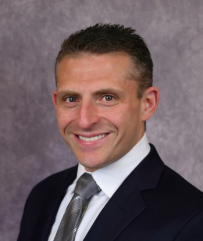
Q: What is your current role in the ACEP Disaster Medicine Section?
A: Chair
Q: What inspired you to work in disaster medicine?
A: The tragic events during September 11, 2001 coincided with my application to medical school. The subsequent years marked by national preparation and a personal desire to be part of the solution influenced my decision to learn more about the emerging field of disaster response.
Q: What concerns do you have about the current threat or vulnerability landscape facing disaster medicine physicians today?
A: One concern is with the increased use of AI in healthcare, the consequent contraction of the workforce. Historically many responses hinged on increased on-site personnel response, but the resultant decreased resiliency will be something to grapple with in the future.
Q: If the zombie apocalypse became a reality - what is your "superpower"?
A: Reality Control: “What Zombie Apocalypse?”
Q: As a child, what did you want to be when you grew up?
A: Troubleshooter
Larissa Unruh, MD
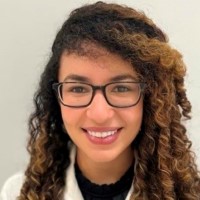
Q: What is your current role in the ACEP Disaster Medicine Section?
A: Chair Elect
Q: What inspired you to work in disaster medicine?
A: I have a background in Fire/EMS as well as public health (epidemiology) and the aspects that I liked best from both of those experiences were always the disaster drills and preparation work. I was in residency when COVID happened and was allowed to operate on my hospital's COVID response team and that solidified my interest in Disaster Medicine.
Q: What concerns do you have about the current threat or vulnerability landscape facing disaster medicine physicians today?
A: I am concerned about what would happen (on the medical side) if the US were to enter into a war. How would we medically take care of that number of injured troops? How would we get them back? Would we send civilian doctors out of country? If so would we have enough medical professionals to take care of in-nation civilians? What if there was also a disaster in the same time frame as the war?
Q: If the zombie apocalypse became a reality - what is your "superpower"?
A: Hiding
Q: As a child, what did you want to be when you grew up?
A: I wanted to be an archeologist like Indiana Jones... upon re-watching the movies I realized that he is actually a grave robber. Does that mean that I wanted to be a grave robber when I grew up? Unclear.
Ryan Hata, MD
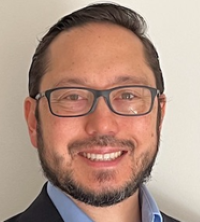
Q: What is your current role in the ACEP Disaster Medicine Section?
A: Alternate Councilor
Q: What inspired you to work in disaster medicine?
A: I've always been interested in disaster preparedness and response, both before and during my career in medicine. As part of leadership for a group with a hospital in Haiti, I helped to coordinate and participate in response efforts to the 2021 earthquake and Tropical Storm Grace. The challenges of this deployment impressed upon me the need for professionalization in all areas of disaster management and inspired me to pursue formal disaster medicine training.
Q: What concerns do you have about the current threat or vulnerability landscape facing disaster medicine physicians today?
A: While there are many challenges facing disaster medicine currently, one of the most pressing is the rapid advance of technology. While certainly a good thing for many reasons, this has led to an increase in the "technology gap" between those who have access to modern technology and those who do not. Additionally, the ability for nefarious actors to leverage these technologies has become a major threat to stability. Disaster medicine experts should be at the forefront of this discussion and leading the equitable implementation of these emerging technologies.
Q: If the zombie apocalypse became a reality - what is your "superpower"?
A: Like batman (or a bizarre episode of Hoarders), I have a collection of "gadgets" and novelties that I could use to help fend off the zombies and restart society.
Q: As a child, what did you want to be when you grew up?
A: Snowboarding rock star. Failed miserably ;-)
Kylie Klemann, MD
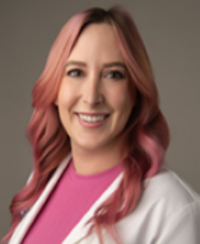
Q: What is your current role in the ACEP Disaster Medicine Section?
A: Councilor
Q: What inspired you to work in disaster medicine?
A: I did EM residency in Indianapolis — the motorsports capital of the world. That meant that I got to participate in the Goliath undertaking that is disaster planning for the largest single day sporting event in the world — the Indianapolis 500. Learning the intricacies of how a 300,000 person event is safely planned and executed was the spark that got me interested in disaster, event, and counterterrorism medicine.
Q: What concerns do you have about the current threat or vulnerability landscape facing disaster medicine physicians today?
A: Climate change (and associated climate disasters) continue to impact the southern US disproportionately to some other regions. I constantly worry about sustainability of our healthcare systems in the southern US, where I practice, as there is no redundancy and a lack of disaster medicine focus in most of our region.
Q: If the zombie apocalypse became a reality - what is your "superpower"?
A: You name it, I can most likely dress it and cook it.
Q: As a child, what did you want to be when you grew up?
A: As boring as it is to admit, I always wanted to be a doctor, but a helicopter pilot was always close behind.
Dominique Wong, MD
Q: What is your current role in the ACEP Disaster Medicine Section?
A: Secretary, Newsletter Co-editor
Q: What inspired you to work in disaster medicine?
A: My underlying mantra is to stop preventable death. This is not a cheery saying, but we have all seen avoidable morbidity and mortality - reducing these underpins my efforts whether it is focused on hospital systems in mass casualties, training law enforcement officers, designing EMS systems for mass gatherings or collaborating with homeland security leaders.
Q: What concerns do you have about the current threat or vulnerability landscape facing disaster medicine physicians today?
A: Connecting silos of expertise will strengthen disaster medicine as a field in efforts to 1. identify and address the rapidly evolving threat landscape 2. effectively horizon scan for unexpected threats 3. collaborate to develop resilient, adaptable systems and improve bi-directional intelligence sharing. A long-winded way of saying, disaster medicine collaborations will allow us to successfully address the many threats and vulnerabilities we face now and in the future.
Q: If the zombie apocalypse became a reality - what is your "superpower"?
A: I am hoping in some scenario, somewhere, my short attention span will actually come in handy.
Q: As a child, what did you want to be when you grew up?
A: I wanted to be a veterinarian. I'm not sure what happened....