 American College of Emergency Physicians

AAWEP Summer 2026 Newsletter
- Chair's Corner: Beyond the Rule Out- the Unique Space Women EM Physicians Inhabit
- My Journey from Burnout to Blackbelt
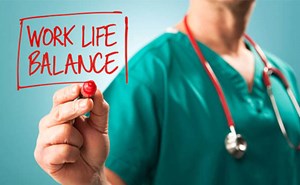
- Beyond the Shift: Why Your Well-Being Is Emergency Medicine's Next Priority
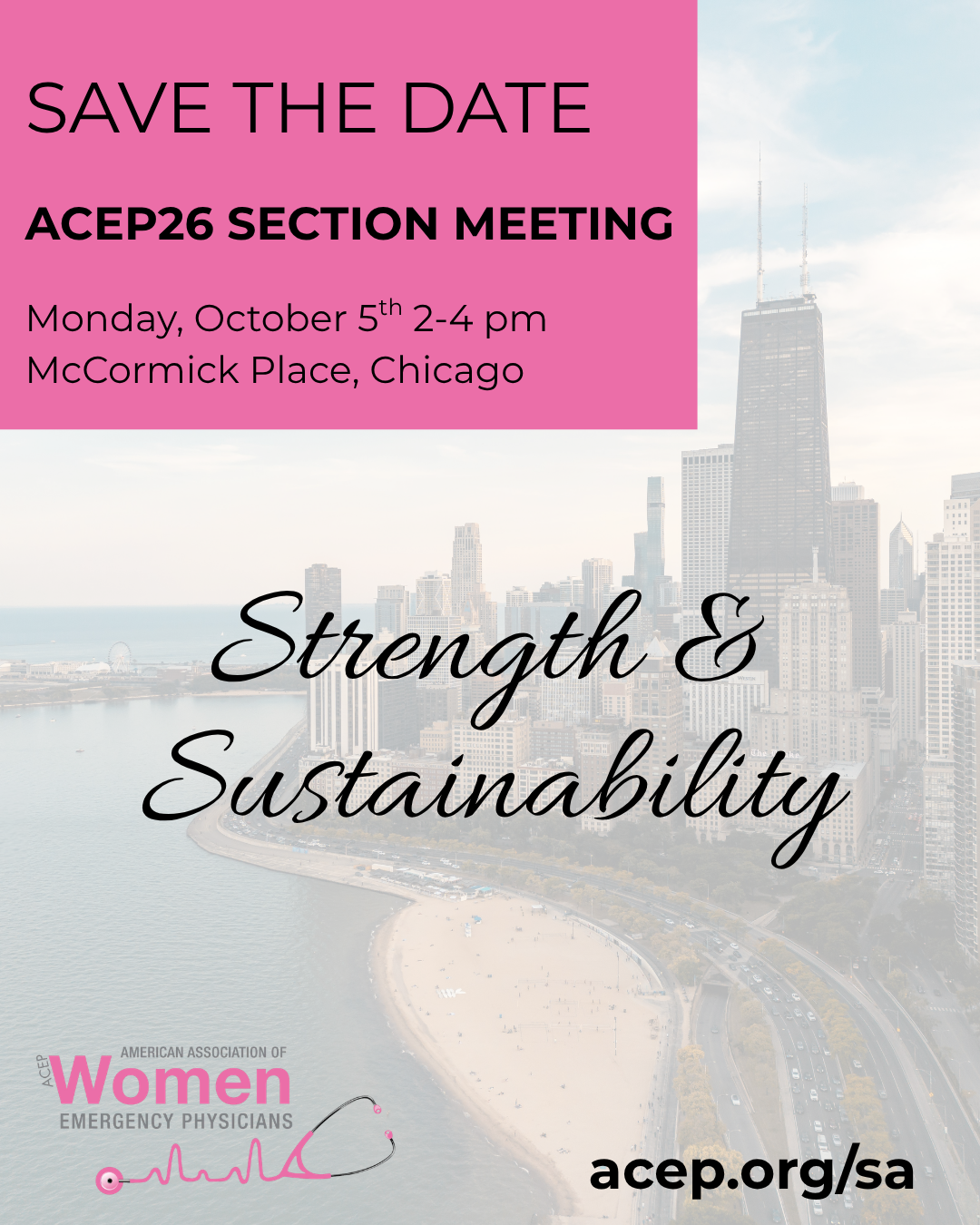
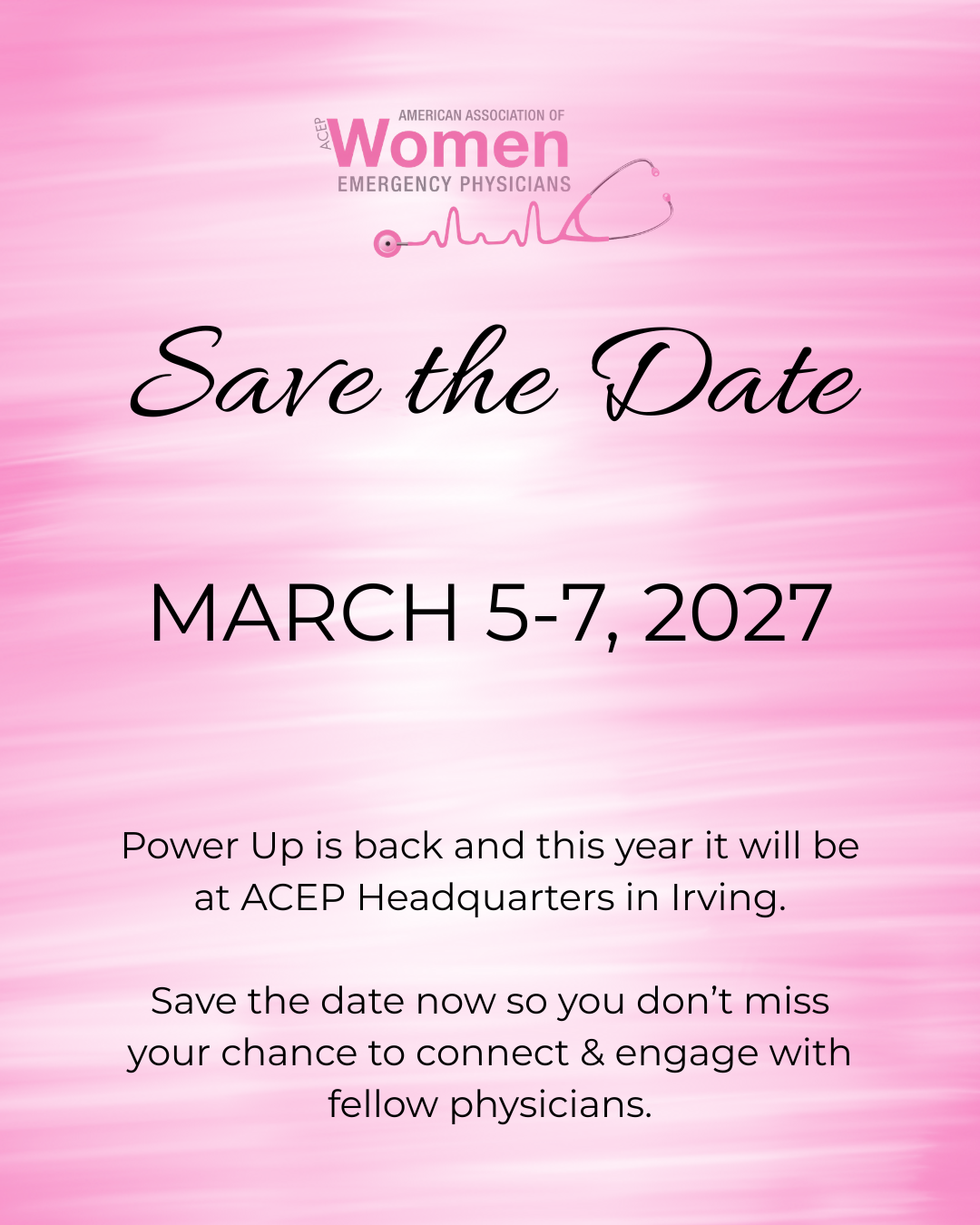
- Save the Dates
Chair's Corner
Andrea Austin, MD, MHPE, FACEP
Chair, AAWEP
Beyond the Rule Out- the Unique Space Women EM Physicians Inhabit
A few weeks ago, I picked up a patient in her 50s with chest pain. Normal EKG. Story that didn't quite fit the cardiac script. Early in my career, I know exactly what would have happened: chest pain, unclear etiology, PCM follow-up. Chart closed, disposition clean.
But I looked at her face, and I knew there was more to the story.
A few more questions, and it unraveled: months of no sleep from hot flashes. A move back home to care for an aging mother. A heaviness she hadn't named out loud yet, but that was unmistakably depression. Her heart was aching — just not in the way most of us feel best equipped to treat.
Thanks to a recent EMRAP episode — Dr. Mizuho Morrison interviewing Dr. Mary Claire Haver — I had the language and the confidence to actually have that conversation instead of deferring it. I discharged her on trazodone, Zoloft, and amlodipine. I stepped into the PCM role myself.
I don't think I could have done that as a new attending. Not because I lacked the knowledge, but because I hadn't yet given myself permission to go beyond telling a patient what something isn’t and start naming what it is.
That's the shift I want to name for this newsletter: a mid-career recalibration. Some days I still don't have the bandwidth, and ruling out remains the job. But on the days I do — when there's enough time and enough of myself left to really dig in — I'm finding real satisfaction in going the extra distance. Not because every patient needs me to be her primary care doctor, but because on that particular day, this one did. And it felt good to go beyond what was required of me, and make a difference for this one patient.
While we still face many challenges as women emergency doctors, I remain steadfast that we have important perspective and brilliance that we bring to our work. We are able to see the whole person in front of us, hot flashes and grief and all. That, to me, is a quiet but real evolution, and that is worth celebrating.
My Journey from Burnout to Blackbelt
Laurel Barr, MD, FACEP
A few years ago, I was looking for anything to recharge my batteries so that I could be present for my patients on shift. I was burnt out. I no longer felt that my clinical skills changed patient outcomes. Covid was still going on even though people and politicians were doing their best to act like it wasn’t there. There was the twin pandemic of covid and opiate overdoses that broke my heart. Violence against ED staff was increasing predictably with patient agitation and a system that would rather ignore their needs than take care of them. I was looking for anything to remind myself that my clinical skills could still make a positive impact. I began teaching, lecturing and advocating. And I found martial arts.
It originally began as a thought that I could teach self defense to healthcare workers, but I also had an urge to complete something that I had abandoned long ago. I childhood activity I got busy and never had time for. I enrolled my kids in Tae Kwon Do during the pandemic when their schools were always in danger of closing and they needed some physical activity. The instructors worked really well with small children and were always supportive and encouraging despite obvious shortcomings. I watched my kids grow, learn, and thrive at a time when most adults were just hoping time would pass. I was sitting there watching my kids every week anyway, so finally I enrolled… and I enrolled my husband. He was kicking but not screaming.
The supportive environment I encountered was foreign to me, and a stark contrast to the toxic work environment I faced every day. I was the fish who didn’t realize she’s surrounded by water because water is all she knows. I had known that my working conditions in the Emergency Department were not ideal. However, with everyone around me experiencing the same thing, the medical culture of normalizing burnout as a personal failing, and social isolation during the pandemic, it was hard to image anything different.
My instructors were as encouraging to me as they were to my children. But more than that, the other adult students (mostly parents of kids enrolled) were just as encouraging starting the moment they overheard I might enroll. Now we cheer each other on every class. After three years, I’ve barely heard a negative comment. The praise correct praise technique, that was given to me as a resident on a note card as an afterthought, is lived here and feels natural and contagious. There is a growth mindset, we are all here to learn and have fun. Not every challenge has to be painful. Not every attempt must be perfect. Even though I missed many classes due to my work schedule, I was never belittled and my commitment was never questioned. When a technique is difficult, we spend more time on it, get individualized instruction and direct feedback, and other students and instructors cheer you on. Improvement came with high fives and fist bumps. There is no surprise “hey can I talk you about a patient you saw last week?” It was a supportive learning environment I needed to experience. This culture was not an accident. It was intentionally created and reinforced daily.
The best part about my black belt journey was not the balance, flexibility, and martial arts techniques I was learning, it was that my family and new friends were there with me. It was helpful to talk to other adults outside of medicine who offered a different perspective. It was helpful to focus on something that wasn’t patient care. It was fulfilling to learn a new skill. My kids became black belts before me, with my husband and I not far behind. Our date nights went from the steak house to a dojo, and when we sparred the instructors would often joke that the loser would have to do dishes. A rainbow of belts and many medals later, we have had success and failures. Failures aren’t framed as a moral failure, but an opportunity to evaluate and improve individual strengths and weaknesses. Successes are celebrated with more than just moving on to the next patient. We have a shared activity we can all enjoy. Bonus points that we can make some pretty cool videos with lightsabers.
My black belt journey came with strength, growth, community, and a breath of fresh air. The respiratory pathogens were likely still present, but the focus was on a shared goal. Completing the journey one step at a time and picking each other up when we fall down (sometimes literally). If you need a breath of fresh air, try something new. Learn a new skill or find a new community. It might just be the perspective you need to visualize a better future.
Beyond the Shift: Why Your Well-Being Is Emergency Medicine's Next Priority
Brittany Garza, DO, MCEP
Summer often brings thoughts of vacations, longer days, and time spent outdoors. Yet for many emergency physicians, the season also means crowded emergency departments, increased patient volumes, staffing challenges, and balancing professional responsibilities with family obligations. While we spend our careers caring for others, summer offers an important reminder to invest in our own well-being.
Emergency medicine is uniquely demanding. Irregular schedules, overnight shifts, and the emotional weight of patient care can make self-care feel like another task on an already overflowing to-do list. However, maintaining our physical and mental health is essential—not only for ourselves but also for our patients, colleagues, and families.
One of the simplest wellness strategies is to embrace the season's opportunities for movement and sunlight. Whether it's a morning walk before a shift, an evening bike ride with family, or simply spending a few minutes outdoors during a break, exposure to natural light and regular physical activity can improve mood, energy levels, and sleep quality.
Hydration is another often-overlooked priority. Busy shifts can make it easy to go hours without drinking water, particularly during the warmer months. Keeping a water bottle readily available and intentionally taking hydration breaks can help combat fatigue and improve overall performance.
Summer is also an ideal time to reconnect with the people and activities that bring joy outside of medicine. Schedule protected time with family and friends. Take the vacation days you've earned. Read a book for pleasure, tend a garden, explore a new hiking trail, or revisit a hobby that has been pushed aside by the demands of training and practice. Meaningful experiences away from work help replenish the emotional reserves that emergency medicine frequently draws upon.
Perhaps most importantly, give yourself permission to rest. In a culture that often celebrates productivity, rest can feel undeserved. Yet recovery is not a luxury—it is a necessity. Adequate sleep, time off, and moments of quiet reflection contribute directly to resilience and longevity in our careers.
As women in emergency medicine, we often serve as caregivers in multiple domains of life. This summer, consider extending the same compassion to yourself that you provide to your patients every day. Small, intentional investments in wellness can have a lasting impact, helping us remain healthy, engaged, and fulfilled both inside and outside the emergency department.
Wishing you a safe, healthy, and restorative summer, ladies!
Save the Dates!