 American College of Emergency Physicians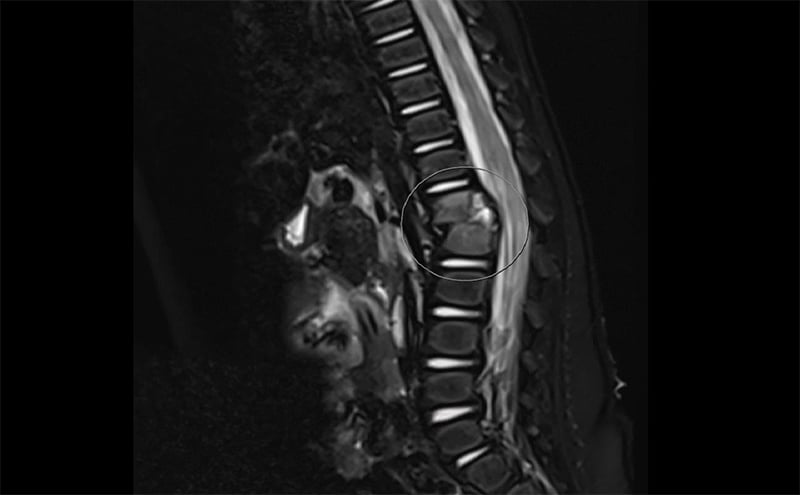

2nd Place EMage Winner: Subacute Hematogenous Osteomyelitis in Children
Mathew Pietz, MD
Emory Pediatrics, Children’s Healthcare of Atlanta, Atlanta, GA
Case Presentation
A 9‑month‑old female with a history of reflux and recent hospitalization for norovirus re-presented for irritability, abdominal “pain”, decreased appetite, and reduced activity without fever, vomiting, diarrhea, or congestion. The examination showed a happy infant with unremarkable vital signs and growth parameters, but physical evaluation revealed an inability to stand with support, a previously acquired skill. Further examination was unremarkable, including tone and upper extremity strength.
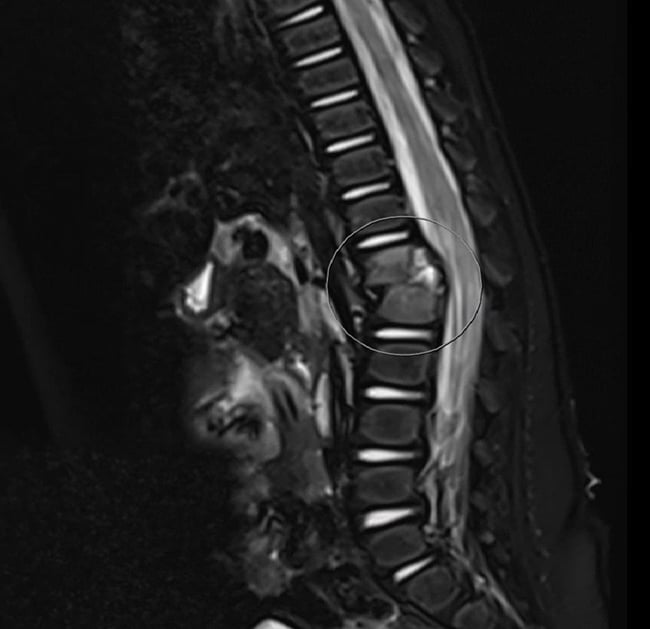
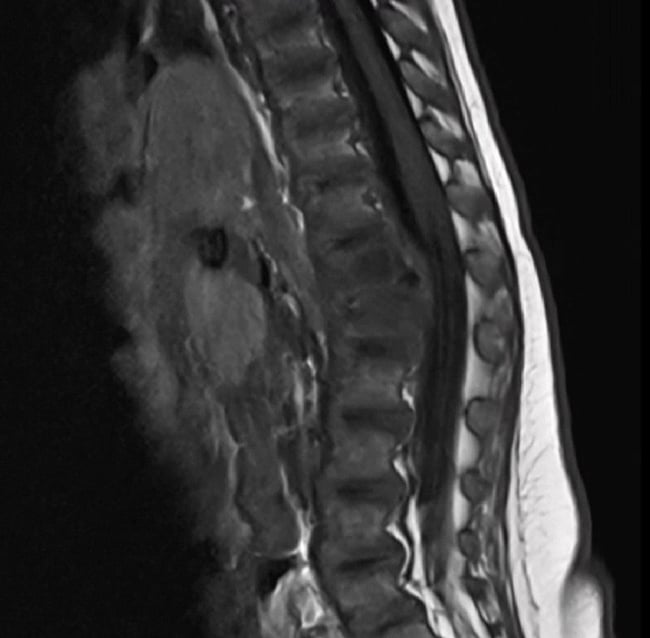
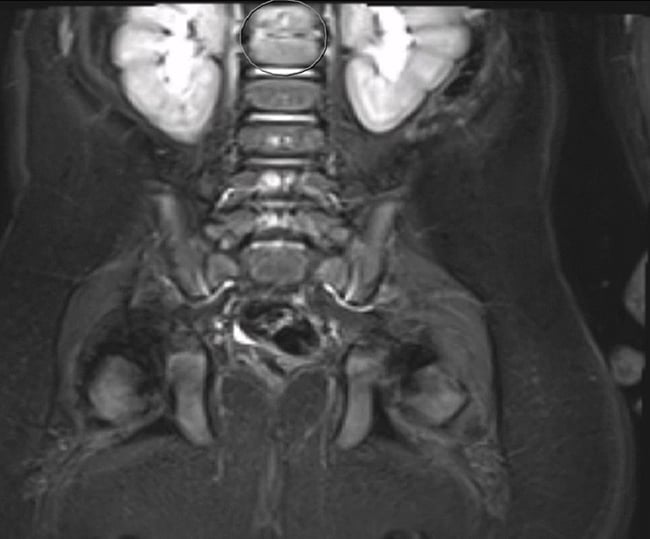
Laboratory studies showed low hemoglobin (10.7 g/dL, RR 11.1-14.1), elevated platelets (598 thou/µL, RR 150-450), and normal inflammatory markers, metabolic panel, and urinalysis. Radiographs and abdominal ultrasound were non-diagnostic. Magnetic resonance imaging (MRI) on hospital day 2 demonstrated spondylodiscitis with L1-L2 discitis-osteomyelitis, abscess, and mild canal narrowing. Given the biopsy risk, empiric clindamycin and levofloxacin were started. Plasma microbial cell-free DNA (Karius®) testing detected Kingella kingae, and therapy was narrowed to oral amoxicillin for a 6‑week course. The patient improved clinically and was placed in a brace with neurosurgery follow-up. MRI obtained 2 weeks post-hospitalization showed improving inflammation with mild residual kyphosis.
At 6-week follow-up, the brace was removed, and appointments were spaced farther apart, as developmental milestones had resumed without recurrence of symptoms. She remains at risk for worsening kyphosis, which may necessitate surgery, but progress was reassuring and corresponds with current literature.
Discussion
Subacute hematogenous osteomyelitis in children often lacks fever, has non-specific symptoms, and may have normal inflammatory markers. Kingella is a leading cause in children between 6-48 months old (~50% of proven osteomyelitis in children <48 months) and may require advanced diagnostics such as Karius®. Prognosis is reassuring with early identification and antibiotics. Infant pain may present as pseudoparalysis or reluctance to bear weight despite benign affect, highlighting the importance of intentional motor assessment and explicit return precautions. The patient’s mother stated that return precautions from the patient’s first hospitalization prompted her to return.
Reference
Wong M, Williams N, Cooper C. Systematic Review of Kingella kingae Musculoskeletal Infection in Children: Epidemiology, Impact and Management Strategies. Pediatric Health Med Ther. 2020 Feb 24; 11:73-84. doi: 10.2147/PHMT.S217475.