 American College of Emergency Physicians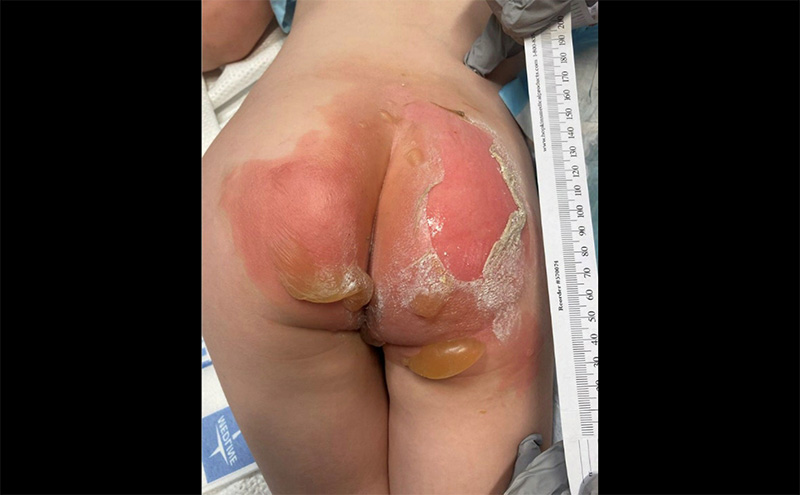

1st Place EMage Winner: Sennoside-Laxative Induced Chemical and Contact Burns
Karolina Piszczek, MD
Richard J. Hamilton, MD
Christopher’s Hospital for Children, Philadelphia, PA
Jeremy Jones, MD
Sinthumathi Natesan, MD
Children’s Hospital of Philadelphia, Philadelphia, PA
Patient Presentation
A 4-year-old male presented to the emergency department (ED) with a blistering rash on his buttocks following accidental ingestion of Ex-Lax Senna Chocolates. The patient’s mother reported that he and his sibling ingested approximately 45 chocolates the evening prior. After contacting Poison Control, she was advised to monitor him at home. Following several episodes of diarrhea, the patient was placed in a pull-up diaper overnight.
About 19 hours after ingestion, new blistering developed on the patient’s buttocks. He presented to the ED 9 hours later due to worsening rash and blister formation. Examination revealed superficial partial-thickness burns and large bullae over the bilateral buttocks extending to the perineum and inferior scrotum, with sparing of the perianal region and gluteal clefts.
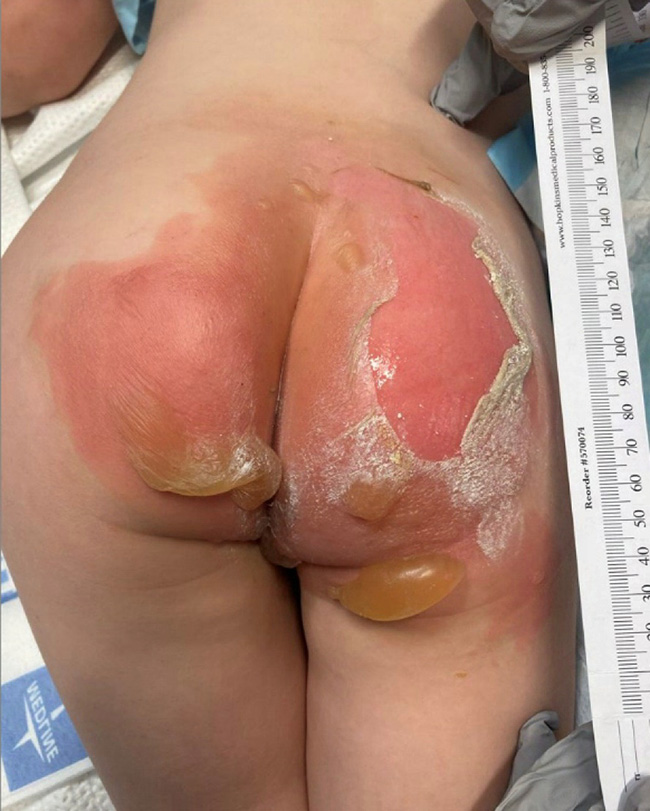
Figure 1. Superficial partial-thickness burn and bullae on ED presentation.
Given the injury pattern, there was initial concern for possible intentional scald injury, and the Child Protection Team (CPT) was consulted. Following further investigation, the ED and CPT concluded that these injuries could also occur in the setting of large ingestions of sennosides. The patient was then transferred to a Pediatric Burn Center for definitive care.
Management
He underwent a non-excisional burn debridement and dressing of 4.5% total body surface area (TBSA) superficial contact and chemical burns involving the bilateral buttocks, perineum, and inferior scrotum. He was discharged the same day with outpatient follow-up one week later, at which time the burns were healing well without evidence of poor scarring.
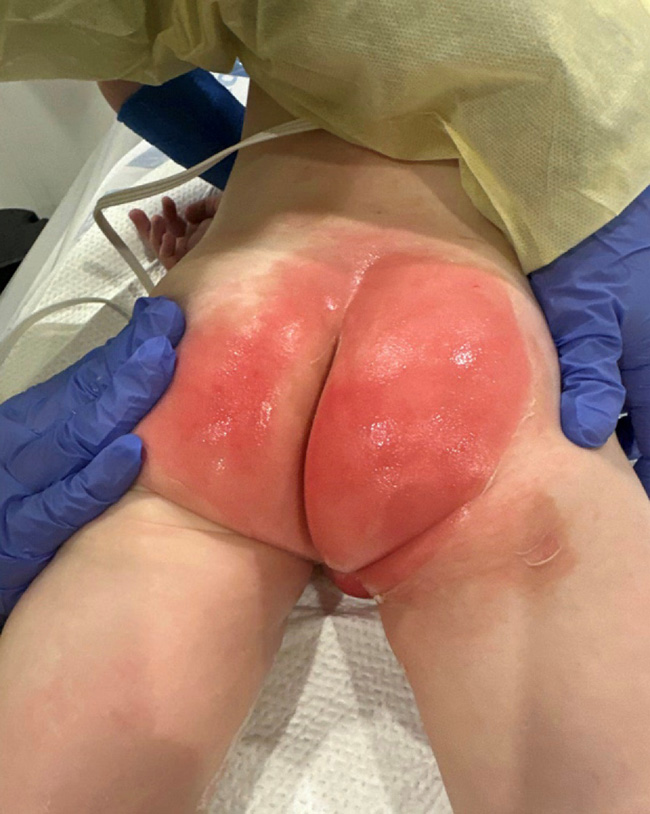
Figure 2. Burn injury post-debridement.
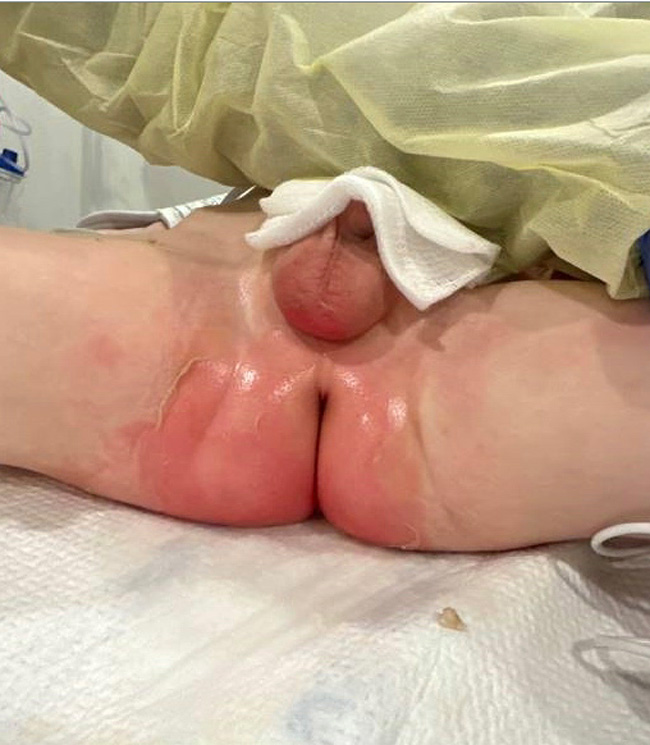
Figure 3. Burn injury post-debridement.
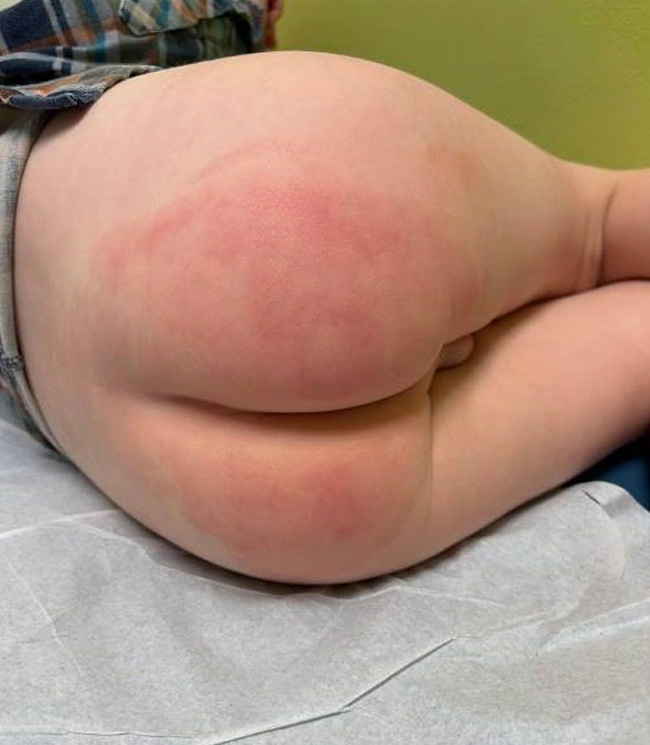
Figure 4. Burn injury at 1-week follow-up.
Discussion
Sennoside-laxative-induced chemical and contact burns have been previously described in pediatric patients, particularly in those diapered after significant diarrhea, suggesting prolonged skin-to-stool contact as the mechanism of injury. These injuries may mimic intentional scald burns, making awareness of this presentation important during child abuse evaluations. If ingestion history is uncertain, urine testing for Rhein, a major metabolite of senna, may help confirm exposure.
References
- Cogley K, Echevarria A, Correa C, De la Torre-Mondragón L. Contact Burn with Blister Formation in Children Treated with Sennosides. Pediatr Dermatol. 2017 Mar;34(2):e85-e88. doi: 10.1111/pde.13068. Epub 2017 Jan 23.
- John M. Leventhal, Dyan Griffin, Karynne O. Duncan, Suzanne Starling, Cindy W. Christian, Timothy Kutz; Laxative-Induced Dermatitis of the Buttocks Incorrectly Suspected to Be Abusive Burns. Pediatrics January 2001; 107 (1): 178–180. 10.1542/peds.107.1.178
- Olorunsogo T, Oarhe CO, Miri AR. Laxative-induced contact burns from accidental ingestion of senna in a 2-year-old female. JPGN Rep. 2025 Sep 28;6(4):434-436. doi: 10.1002/jpr3.70087.
- Spiller HA, Winter ML, Weber JA, Krenzelok EP, Anderson DL, Ryan ML. Skin Breakdown and Blisters from Senna-Containing Laxatives in Young Children. Annals of Pharmacotherapy. 2003;37(5):636-639. doi:1345/aph.1C439