 American College of Emergency Physicians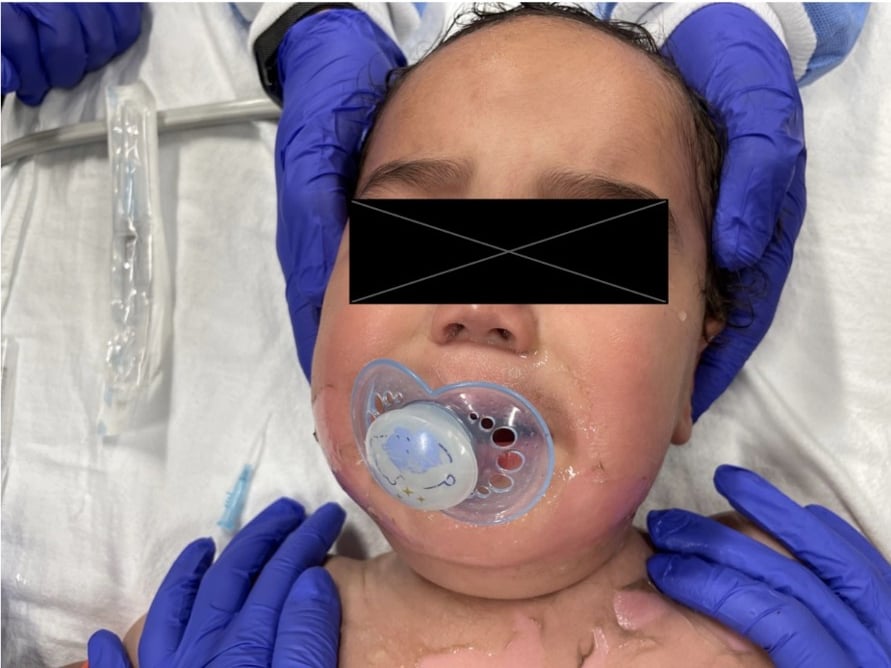

3rd Place EMage Winner: Pediatric Airway Conundrum: A Case of Thermal Epiglottitis
Mario Ramos DO
HCA Kendall Regional Hospital, Miami, FL
Case
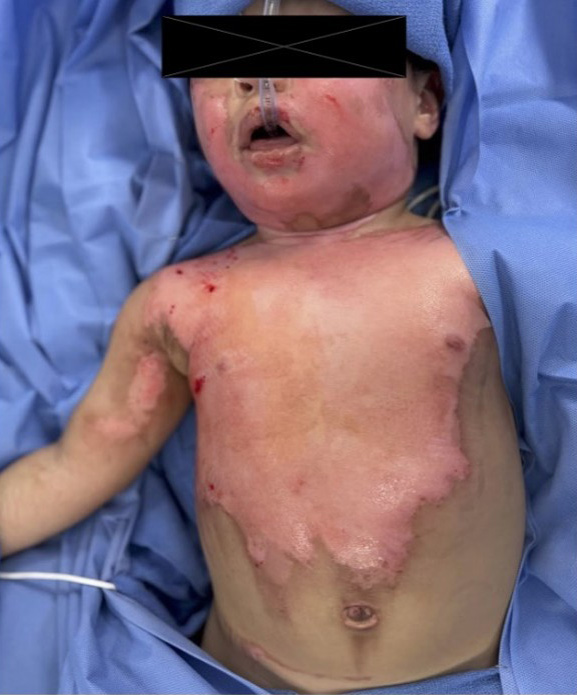
A one-year-old male with a history of bronchiolitis presented to the emergency department two hours after sustaining second-degree scald burns to his lower face and torso (8% TBSA, palmar method). On arrival, he exhibited intermittent stridor at rest. The parents reported recent upper respiratory symptoms beginning the day prior and a history of bronchiolitis, but no croup. Examination showed no intraoral burns, but a blister was noted on the lower lip. He was saturating well on room air and initially received racemic epinephrine and dexamethasone for presumed viral croup.
Over the next two hours, his condition worsened despite additional treatment with intramuscular (IM) epinephrine, albuterol/ipratropium, intravenous (IV) solumedrol, and IV magnesium sulfate. He developed respiratory distress with grunting, retractions, and nasal flaring. Endotracheal intubation was attempted under ketamine, midazolam, and rocuronium. Direct laryngoscopy with Miller 1 and 2 blades failed due to swelling obscuring vocal cord visualization. A Glidescope was used, and after four attempts, he was intubated with a 3.5 ET tube. Significant thermal damage and edema of the upper airway were noted. He was admitted to the pediatric intensive care unit (PICU) for further airway management and burn care, including skin grafting.
Diagnosis
This case highlights thermal epiglottitis as a rare but critical cause of upper airway obstruction following facial scald injury in a child. Unlike classic infectious epiglottitis, thermal injury can occur without intraoral burns or inhalation. Similar cases are rare, and the mechanism of deeper thermal injury from superficial burns remains unclear. Clinicians should maintain high suspicion for airway compromise in children with facial or upper chest burns and evolving stridor. Early airway intervention and escalation to advanced techniques, such as video laryngoscopy, may be lifesaving in these complex presentations.