 American College of Emergency Physicians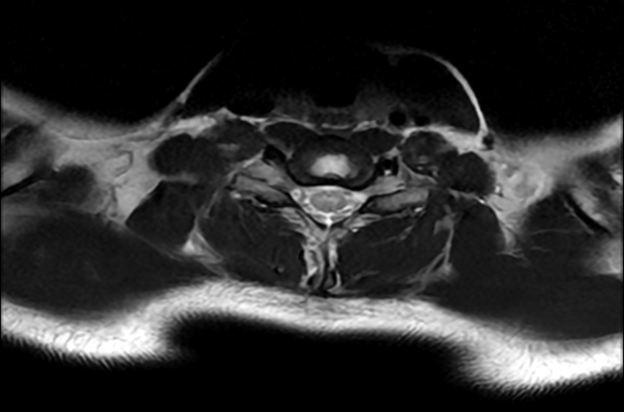

1st Place EMage Winner: Jumping Into Crisis: Spinal Cord Infarction After Minor Trauma
Mayla Cruz, MD
Andrea Garcia-Rodriguez, MD
Isabel Brea, MD
HCA Florida Kendall Hospital, Miami, FL
Abstract
Spinal cord infarction is a rare but serious injury that can occur even after minor trauma. We present an unusual case of anterior cord syndrome (ACS) in a healthy adolescent female following recreational trampoline use, without direct blunt trauma or identifiable risk factors. This case underscores the risk of severe neurologic compromise from seemingly benign activities and highlights the diagnostic challenges of recognizing spinal cord infarction in young, otherwise healthy patients.
Introduction
Spinal cord infarction is rare in the pediatric population and is most commonly associated with trauma.4 Additional etiologies include congenital cardiovascular anomalies, cerebellar herniation, thromboembolic events, and infections. Although uncommon, spinal cord infarction in children can result in significant long-term neurologic deficits and may be challenging to diagnose, particularly in younger patients, where it can mimic other spinal cord pathologies.4
Anterior cord syndrome (ACS) is the most frequent clinical presentation of spinal cord infarction. It is a rare neurologic condition resulting from injury to the anterior two-thirds of the spinal cord, leading to complete motor paralysis and loss of pain and temperature sensation below the level of injury, while sparing proprioception and vibratory function.1 Among athletes, ACS is often associated with hyperflexion injuries that result in spinal instability, acute disc herniation, or hematoma formation. Indirect mechanisms include ischemia from anterior spinal artery compression or, more rarely, embolization of fibrocartilaginous disc material causing vascular compromise.3
We present the case of a previously healthy 16-year-old female who developed spinal cord infarction resulting in ACS, without any identifiable risk factors or evidence of direct spinal trauma.
Case Presentation
A 16-year-old female with no significant past medical history presented to the emergency department accompanied by her mother with severe back pain that began immediately after jumping at a trampoline park. She was ambulatory and able to bear weight on arrival. She described sharp 10/10 pain localized to the lower cervical and thoracic spine without any initial neurological symptoms. There was no reported blunt trauma, fall, head strike, or loss of consciousness. She denied urinary or bowel incontinence or retention.
On exam, she had paraspinal and midline tenderness over the cervical and thoracic spine, intact sensation, and reduced upper extremity strength secondary to pain. Voluntary gluteal contraction was preserved, and no saddle anesthesia was noted. A cervical collar was applied for spinal precautions.
She developed progressive paresthesias and distal weakness, ultimately evolving into acute flaccid paralysis of all four extremities, weak cough, poor rectal tone, and urinary retention within six hours of arrival.
Results
CT imaging of the brain and entire spine, performed without contrast, showed no evidence of acute traumatic injury. However, given the clinical deterioration, concern arose for spinal cord injury without radiographic abnormality (SCIWORA), a condition more commonly seen in the pediatric population.1
Initial MRI revealed subtle abnormal signal in the anterior spinal cord from C5 to T2, most prominent at C7, without abnormal enhancement. Differential diagnoses included myelitis, transverse myelitis, demyelinating disease, and, less likely, cord infarction. A repeat MRI approximately 12 hours later confirmed spinal cord infarction spanning C3 to T1, without significant spinal canal stenosis or foraminal narrowing.
Figure 1: Magnetic resonance imaging (MRI)
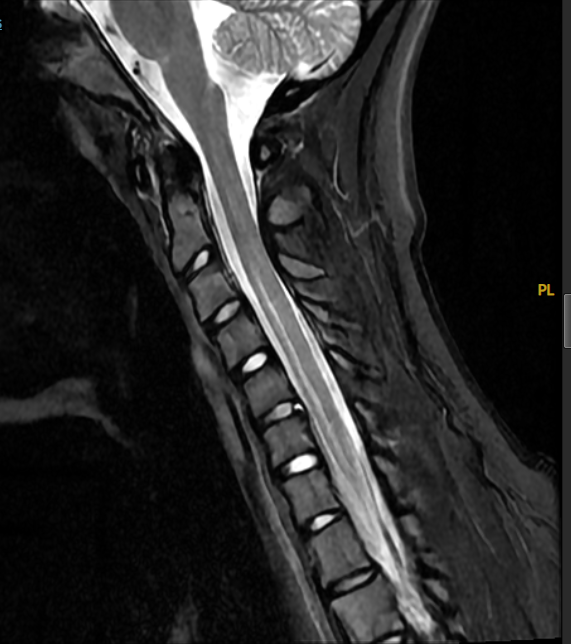
Figure 2: Subtle abnormal signal in the anterior aspect of the cord from C5 to T2 without evidence of abnormal enhancement, more evident at the C7 level.
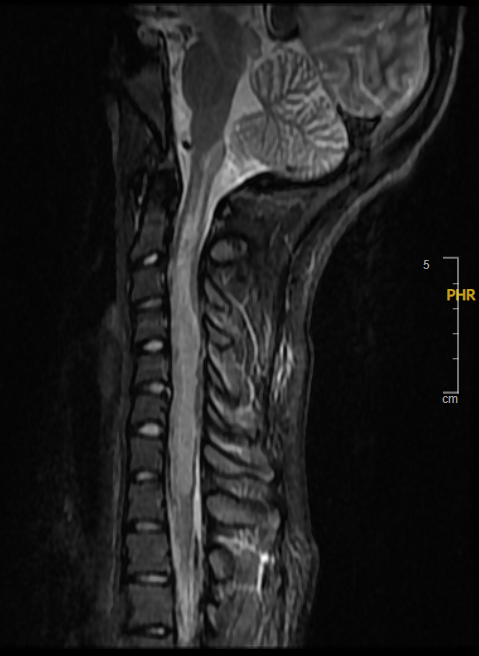
Figure 3: The abnormal signal with expansion of the cord from the brainstem to T2 demonstrates restricted diffusion, most likely representing a cord infarction.
Discussion
Anterior cord syndrome (ACS) accounts for approximately 5% of incomplete spinal cord syndromes, with most cases resulting from compromised blood flow through the anterior spinal artery.2 Spinal cord infarction itself is exceedingly rare in the pediatric population, with a diverse range of etiologies that differ significantly from those seen in adults, including minor trauma, congenital cardiovascular anomalies, and fibrocartilaginous embolism.3,4
This case is particularly notable due to the absence of major trauma, direct spinal impact, or predisposing vascular risk factors. The patient’s rapid neurological decline within hours of presentation underscores the potential severity of spinal cord ischemia even after seemingly benign activities, such as jumping at a trampoline park. Spinal cord injury without radiographic abnormality (SCIWORA), more prevalent in children due to greater spinal elasticity, was initially suspected given the normal CT findings.1,5 SCIWORA can occur through various mechanisms, including ischemia secondary to vascular compromise, highlighting the diagnostic challenge in similar cases.5
Magnetic resonance imaging (MRI) remains the gold standard for identifying spinal cord pathology when radiographs and CT imaging are unrevealing.1 In this patient, early MRI findings were subtle, delaying definitive diagnosis until progression on repeat imaging demonstrated extensive infarction from C3 to T1.
The prognosis in spinal cord infarction is highly variable and depends largely on the extent of ischemic injury and timeliness of intervention.3 While there are no established treatment guidelines specific to pediatric patients, early recognition, immobilization, and supportive care are critical to minimizing further spinal cord injury and maximizing functional recovery.
Conclusion
This case highlights the potential for spinal cord infarction leading to anterior cord syndrome following seemingly minor trauma and emphasizes the diagnostic challenges in pediatric patients without identifiable risk factors. With the growing popularity of commercial indoor trampoline parks and other high-impact recreational activities, clinicians should maintain a high index of suspicion for spinal cord ischemia in children and adolescents presenting with severe back pain and subtle neurological deficits. Increased awareness of this rare but life-altering condition may support earlier diagnosis, promote further research, and ultimately improve outcomes in the pediatric population.
References
- Tintinalli, et al. Tintinalli's Emergency Medicine: A Comprehensive Study Guide, 9e Eds. McGraw-Hill Education, 2019.
- Sandoval JI, De Jesus O. Anterior Spinal Artery Syndrome. [Updated 2024 Jun 7]. In: StatPearls [Internet]. Treasure Island (FL): StatPearls Publishing; 2025 Jan-. Available from: https://www.ncbi.nlm.nih.gov/books/NBK560731/
- Fonseca AL, Isaacs AM, Meyer M, et al. Fibrocartilaginous embolism: a rare cause of spinal cord infarction in children. J Neurosurg Pediatr. 2015;15(6):653-657. doi:10.3171/2014.11.PEDS14366
- Sheikh A, Warren D, Childs AM, Russell J, Liddington M, Guruswamy V, Chumas P. Paediatric spinal cord infarction-a review of the literature and two case reports. Childs Nerv Syst. 2017 Apr;33(4):671-676. doi: 10.1007/s00381-016-3295-8. Epub 2016 Nov 26. PMID: 27889817; PMCID: PMC5382181.
- Nance JR, Golomb MR. Ischemic spinal cord infarction in children without vertebral fracture. Pediatr Neurol. 2007 Apr;36(4):209-16. doi: 10.1016/j.pediatrneurol.2007.01.006.