 American College of Emergency Physicians

The Art of Healing: Story, Meaning and Emergency Medicine
Table of Contents
Fiji Rural Clinic– 2025 Visual Arts Award Submission
An 88-Year-Old Woman was Brought to My ER. – 2025 Writing Award Submission
Member Update: Rachel Kowalsky
From the Editor:
Good morning, good afternoon, and good evening to our Medical Humanities Section members and friends.
It is truly an honor to welcome you to another edition of our newsletter.
As always, I continue to be inspired by the creativity, insight, and generosity that members of this section bring to emergency medicine. At a time when our specialty continues to evolve rapidly — technologically, operationally, and educationally — the humanities remain an important reminder that medicine is, at its core, profoundly human work.
Over the past several months, our section has continued to demonstrate the growing presence and importance of the humanities within emergency medicine. Most recently, members of our community played an important role at the Society for Academic Emergency Medicine Annual Meeting through The Art of Healing: Applying the Health Humanities in Emergency Medicine Education, an advanced workshop that was exceptionally well attended and warmly embraced by participants.
The enthusiasm surrounding the workshop reflected something larger than a single session. There was genuine interest in reflection, storytelling, narrative medicine, creativity, and the role that the humanities can play in helping physicians navigate the complexity of modern medical practice. Conversations around meaning-making, communication, well-being, professional identity formation, and the lived experience of caring for patients resonated deeply with attendees across levels of training and practice.
What continues to encourage me most is the growing recognition that the humanities are not separate from emergency medicine, but integral to it. They help us process difficult experiences, connect more deeply with patients and colleagues, and preserve the sense of purpose that brought many of us to this work in the first place.
As our section continues to grow, I encourage all of you to continue sharing your work, ideas, reflections, essays, artwork, educational innovations, and creative projects. The strength of this community comes from the willingness of its members to contribute their voices and experiences in ways that enrich both our specialty and one another.
We also look forward to gathering again at the upcoming annual section meeting during the American College of Emergency Physicians Scientific Assembly in Chicago. I hope many of you will join us as we continue building community and expanding the role of the humanities within emergency medicine.
Until then, I wish all of you wellness, inspiration, and continued meaning in the important work that you do every day.
From the Chair
Kamna Balhara, MD, MA, FACEP
Dear colleagues,
Happy spring and nearly summer!
I want to start this letter by sharing with you a work of art I recently came across at the National Gallery of Art - Sandy Skoglund’s "Fox Games." A version of it can be seen here. For me, it was, strangely enough, very reminiscent of the whimsy, wonder, and downright weirdness of practicing emergency medicine. It also has a tinge of discomfort - of the bright red undercurrent of gore and danger with which we grapple in our work, and of how hard it is to explain the experience of working in the ED to others who've never done so. I’d like to invite you to spend a few moments with the work - perhaps you'll see something entirely different!
Coming back to our section - this has been a productive and jam-packed few months!
Ten of our own section members did an incredible job sharing their talents in a four-hour (!) conference workshop at the SAEM annual meeting in Atlanta - focused entirely on the arts and humanities in EM education! A full house of attendees joined us for experiential activities that highlighted the power and potential of medical improv, creative writing, narrative medicine, and visual arts-based education. I am very optimistic that this signals growing momentum in support of the arts and humanities in our specialty - and it’s a powerful testament to the visibility and attention each of you is bringing to arts and humanities in EM,
Stay tuned for some exciting programming coming from our section! We will be having a three-part webinar series this fall led by Jay Baruch and Rachel Kowalsky. This will be a compelling series of conversations that will highlight the unique role of the health humanities in supporting us in clinical spaces. Hope you join us and spread the word far and wide once dates are announced.
Please do contact me if you have ideas for webinars sponsored by our section in the spring.
I am also thrilled to share that we will aim to submit our consensus paper on the relevance of the health humanities to EM before the end of this year. For those less familiar with this initiative, volunteers from our section formed a consensus group to examine this question, and we are closing in on a final draft! Please keep an eye out for more updates through our Engaged platform.
We are also looking to generate a resolution for the ACEP Council to consider at ACEP26, asking ACEP to state their support for the importance of the arts and humanities in EM practice and education. Please reach out to me and our wonderful section councilor, Diane Birnbaumer, if you have ideas to make this successful, and if you work with a section that might be a good fit as a co-sponsor.
And, finally, an announcement will be coming out soon for this year’s writing and visual arts awards. We look forward, as always, to your extraordinary creativity and talent!
I hope to see many of you at our section meeting at ACEP26: Tuesday, October 6, 10:30-11:30 am, McCormick Place Convention Center, Level 1, room W192A. Additionally, this year’s “section hall crawl” will be part of the Wine & Wander event – October 5, 5-7 pm, Exhibit Hall. We will need volunteers to staff our table! Please let Tracy Napper know if you want to hang out, enjoy some beverages, and share the joy of the arts and humanities with other ACEP members as they stroll by.
In the meanwhile, let's keep the asynchronous conversations going through our online Engaged group: medicalhumanities@groups.engaged.acep.org. It's a delight to get to support the arts and humanities in community with you! And don’t forget our Facebook page!
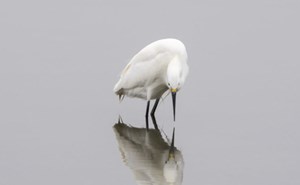
Fiji Rural Clinic– 2025 Visual Arts Award Submission
Rob Golomb, MD
*photos used with permission
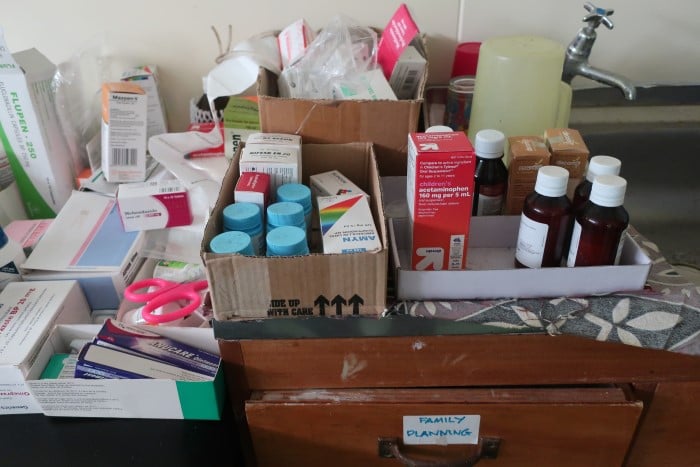
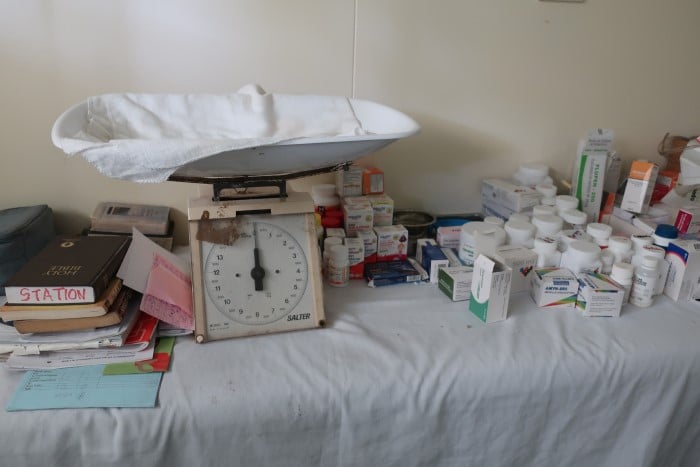
An 88-Year-Old Woman Was Brought to My ER.
When Her Family Told Me Why, I Was Stunned.
Diane Birnbaumer, MD
The computer said she was an 88-year-old female with a chief complaint of fatigue. From experience, I knew fatigue in an older person could be caused by almost anything. So… was it a heart attack? Depression? Cancer? An infection somewhere? Or was she just… fatigued?
The real reason she was there never crossed my mind.
The tiny woman sat precisely in the center of the gurney. Her white tennis shoes sat under the chair with a thick, flesh-colored knee-high stocking tucked inside each one. On the seat of the chair was a neatly folded yellow cardigan atop an equally neatly folded brown dress.
She wore her hospital gown like a jacket, open to the front, and her knobby hand clutched it closed over her cross-your-heart bra and waist-high white cotton panties. A Catholic cloth scapular with an image of the Virgin Mary hung on a string around her neck, and a tiny gold cross on a fine gold chain nestled in the hollow at the base of her neck.
“Hola. Mi nombre es Doctora Birnbaumer. Como se llama?”
“Hola, Doctora. Mi nombre es Maria.”
Her eyes sparkled, and she sat up straighter, her posture that of someone who found life interesting. I checked her armband and offered to cover her with the sheet folded at her feet. She nodded.
I asked her how she was feeling. Fine, she said. Was anything bothering her? No, she said. Any pain? No. Any shortness of breath, chest pain, headache? No, no, and no. I went through my list and she denied anything being amiss.
Her only encounters with the medical system had been for the births of her many children, several of whom she had outlived. Widowed over two decades before. Lived alone, with family nearby. Not working but spent most of her life working as a housekeeper. No meds, no allergies, no surgeries.
I asked if I could examine her, and she nodded. From head to toe, she was remarkably fit. Her bright, curious eyes nestled in a sea of soft skin and were bracketed by deep crow’s feet sculpted by years of smiling. The rest of her head and neck exam were normal. A tiny bit of curvature of the spine. Clear lungs, a strong, steady heartbeat with no abnormal sounds. Abdomen, extremities, neuro exam… all normal.
I was flummoxed. She watched me expectantly.
I said, “So, are you sure nothing is bothering you today?”
She shrugged and raised her hands in a “what can you do?” gesture.
I was getting nowhere. Time for a different tactic.
I asked her why she was in the emergency room. She said she didn’t know.
Dead end. New angle. “How did you get here today?”
Her face blossomed into a smile. Her daughter, granddaughter, and great-grandson had come by her home, picked her up, and brought her to the emergency department.
Finally. Maybe an answer.
With Maria’s permission, I sought out her family members in the waiting room. They were easy to find, all three resembling the petite woman on that gurney. The same dark eyes stared at me, but while hers were bright and inquisitive, theirs were red-rimmed, and their eyelids were swollen.
As we entered the family room, the two women deferred to the teenage boy who acted as spokesman. He remained standing as the women and I sat.
They all turned to me, waiting. I cleared my throat. “So, I was wondering, why did you bring Maria to the hospital today?”
Instantly all three sets of eyes filled with tears. The oldest woman nodded to the boy, and he spoke, dropping his gaze to the floor.
“My cousin. He died. The police came to my aunt’s house and told her he got shot.”
“Oh! I’m so sorry.” Now I understood the tears.
We sat for a few more moments in silence. No one moved. And I still didn’t know why Maria was there. I ventured, “So, is there something wrong with your great-grandmother?”
The boy answered. “My cousin. He is… was… Abuelita’s favorite. Everyone in the family knows it.” The boy’s voice was pleading, but I still didn’t understand. He blurted, “We want you to tell her he’s dead.”
And there it was.
I wish I could deny it, but my first reaction was irritation. Really? There was nothing medically wrong with her? The emergency room was packed with people, some were really sick, and I just spent fifteen precious minutes on this? Did people really think the emergency room fixed everything?
Then the three of them started talking at once. They feared she’d have a heart attack or
a stroke when she found out. That the news might kill her. They didn’t want to tell her. Someone else needed to do it, and she needed to be where, if something terrible happened, she’d be taken care of.
I sat with that for a moment. I recalled how I felt when my Dad called me with the news that his thigh pain was from a tumor that had spread from a mass in his lung. I remembered how much I wanted someone to tell me it would be okay, that we would all survive this, that the world, now horrifyingly askew, would somehow right itself. The healing that eventually happened didn’t result from any discussions with a doctor but grew from the love and support we gave each other as a family, from the times we would lean together, our hands and heads touching, creating an edifice, a steeple from which we could all draw strength.
Through these memories, my path forward became clear.
I took a breath and leaned forward to look each of them in the eyes. I made sure they heard me when I told them I was there for them, all of them… including Maria. That I would be there with them, in the room, and around for hours to watch Maria if she needed anything, to make sure she was safe and taken care of. I had their backs, but the news needed to come from them.
They searched each other’s faces, then they all nodded.
As we all walked into her room, Maria’s bright smile faded when she saw our faces. They moved to her bedside. I slid a box of tissues onto the table near Maria and stepped away.
Maria was now surrounded by the three generations of her progeny. They spoke to her in Spanish in hushed tones, and I watched as four lives, four generations, confronted the dreadful news.
Maria listened quietly. Her straight posture sagged the tiniest bit, her smile disappeared, and her face aged decades in moments. She reached one hand, spotted with age and deformed by years of labor, out to her family, and they all joined hands. With her other hand, she clutched her scapular, pulling gently on the string that attached it around her neck.
I eased out of the room, leaned against the wall in the hallway, and remembered.
I remembered being a young woman deeply invested in caring for others and deciding my future was in medicine. I happily took on the years of schooling and training and debt required to become a doctor. I recalled the thrill of learning about the human body, how it works and what to do when it doesn’t.
I remembered cringing when I learned to start an IV and the patient gasped in pain. My heart broke the first time I told a patient they had a terminal disease. I cried myself to sleep the night when, as a third-year medical student, the man I assured would do fine during his coronary bypass surgery died on the operating table.
But I couldn’t remember exactly when my empathy started to slip away.
I knew that when I started my shifts, I walked through an ambulance bay packed with paramedics, gurneys and patients. I knew that no matter how hard or how fast I worked, the waiting room would never be empty. Patients came to the emergency department when they were injured and ill, but also when they could not get in to see their own physicians, or when they lost their insurance, or because after-hours was the only time they had off between jobs. Police brought in patients who had nowhere to go or had behavioral problems or whose addictions had consumed their lives. There were never enough beds, patients waited for hours, and everyone, patients and staff alike, was understandably tired and angry. There was no way to do a good job, at least not as good a job as I had been trained to do. Despite that, administrative bean counters reduced my performance to counting how many patients I saw per hour and how many tests I ordered.
When I became an emergency physician, I had been all in on taking on the hard work and the erratic schedule, the difficult decisions and the busy shifts that went with the job. Over time, though, I had let the demands of a changing, overstressed and broken system knock me off course.
Standing in that hallway, listening to the soft murmurs of Maria and her family, I remembered why I was there. Why I chose this profession, why I worked these crazy hours, why I did this job.
I pulled away from the wall and headed off to care for the next patient waiting to be seen.
Maria didn’t have a heart attack or a stroke. An hour later, she sent her great-grandson to find me to tell me she wanted to leave. Her family helped her into her clothing and gathered her things as I prepared what was needed to send her home. At the door to her room, I hugged each of them in turn, Maria last, knowing her visit to the emergency room was exactly what she and her family needed.
Apparently, it was exactly what I needed, too.
*Used with permission.
Member Update
Please remember to share any accomplishments you have recently received! This year’s alternate councillor, Rachel Kowalsky, MD, shared her good news:
12/10/26: I was nominated for a Pushcart Prize for my short story “Dear Dolores,” published in -ette magazine. In March 2026, I gave an invited reading of the story at the Association of Writers and Writing Programs in Baltimore, Maryland.
2/21/26: I gave the Harriet W. Sheridan Lecture at the Warren Alpert Medical School of Brown University's Stepping Up Ceremony, Providence, RI. This lecture is typically given by a scholar in the area of literature and medicine.
3/24/26: The anthology Where it Hurts (ed. Donna Bulseco) was published, featuring my short story “Your First Pediatric Intubation.” I gave a reading at the launch party at P&T Knitwear in NYC, NY and also read the story at The University Seminar on Narrative, Health, and Social Justice at Columbia University.
4/11/26: I was a panelist on the panel “Here Our Stories Get Told: Creative Writing's Role in Health Humanities. Jonathan C. Chou, Rachel Kowalsky, Renée Nicholson, Shanda McManus” at the Health Humanities Consortium Annual Conference in Indianapolis, Indiana.
4/26/26: I had a poster presentation “Kowalsky R, Barnett M, Marathe P, Douglas S, Fraymovich S, Stewart CB, Platt S, Ball S, Thomas C, Finkelstein H, Basu E. Can a Narrative Medicine Curriculum Impact Burnout Scores and Quality of Life for Residents on the Pediatric Oncology Service?” at the Pediatric Academic Societies Annual Meeting, in Boston, MA.
5/1/26: I completed my Certificate of Professional Achievement in Narrative Medicine at Columbia University School of Professional Studies
5/18/26: I was faculty for Kamna Balhara’s workshop, “The Art of Healing: Applying the Health Humanities in Emergency Medicine Education” at the Society for Academic Emergency Medicine Annual Meeting in Atlanta, GA.
6/25/26: I won the Weill Cornell Medicine Excellence in Medical Education Award (upcoming, but I was already notified).
Congratulations, Rachel!!