
 American College of Emergency Physicians

Bridging the Educational Divide: Techies Without Borders' Transformative Mission in Ecuador
Dr. Jessica Pelletier, DO, MHPE
(Medical Director, Techies Without Borders; Department of Emergency Medicine, University of Missouri-Columbia, USA)
Pablo Boada
(Latin America Coordinator, Techies Without Borders; Hombro a Hombro, Ecuador)
Dr. Dawn Magnusson, PT, PhD
(Associate Professor, Department of Physical Medicine and Rehabilitation, University of Colorado, USA)
Dr. Manoj A. Thomas, PhD
(President, Techies Without Borders; Discipline of Business Information Systems, University of Sydney, Australia)
In the ever-evolving landscape of global Emergency Medicine, equitable access to continuing medical education (CME) remains a critical challenge. Techies Without Borders (TWB), a US-based 501(c)(3) nonprofit organization, is dedicated to breaking down these barriers to increase accessibility to continuing education for healthcare workers in resource-limited settings.
Healthcare professionals in low- and middle-income countries—including doctors, nurses, paramedics, and pharmacists—frequently face major systemic barriers, including limited Internet access, frequent power outages, and prohibitive CME costs. To combat these barriers, TWB has developed innovative, offline technological solutions via a program called “CME Solutions” (CMES). Today, TWB is proud to have over 70 partner sites across 19 countries, and we continue to expand our footprint throughout Latin America and globally.1
Innovative Solutions for Offline Learning
TWB’s core intervention involves deploying small, handheld computers that operate entirely offline and are provided free of charge to our partner sites. Designed for resilience, these devices automatically reboot if power fails and enable users to download content to their mobile devices, thus addressing disruptions to knowledge access in areas with inconsistent electricity.
The CMES devices provide access to an extensive library of resources without requiring expensive mobile data. We recently upgraded the older CMES-Pi system to a newer version that supports video content, improved search, and data analytics. This version uses low-cost, palm-sized mini computers that are faster and can support more simultaneous users than earlier Raspberry Pi devices, expanding capabilities from audio and PDFs to high-quality video. The content library is specifically geared toward emergency and primary care, featuring thousands of concise, point-of-care resources generously donated by partners such as EM:RAP, the WHO, Core Ultrasound, emDocs, Life in the Fast Lane, and UPando (a Spanish-language point-of-care ultrasound [POCUS] resource).
Empowering Ecuador: A Week of Upgrades and Education
TWB’s original partner sites in Ecuador were established in 2022 through a collaboration with the NGO Hombro a Hombro. In April 2026, the volunteer team returned to Ecuador for an intensive week of system upgrades and hands-on clinical education across the country. To ensure the highest quality of education and reduce language barriers, our Latin America coordinator joined the team to serve as an in-person interpreter during clinical lectures.
Santo Domingo: The TWB volunteer team’s first stop was the Hombro a Hombro clinic, which serves a highly underserved population approximately three hours west of Quito. After upgrading their system to provide access to concise Spanish-language videos on critical emergency care, we delivered a hands-on, interactive POCUS session, allowing staff to practice echocardiograms. The lecture was reinforced by showing staff the hundreds of POCUS videos and free POCUS course provided by Alfred Health, Monash University, Australia, which is embedded into the CMES platform.
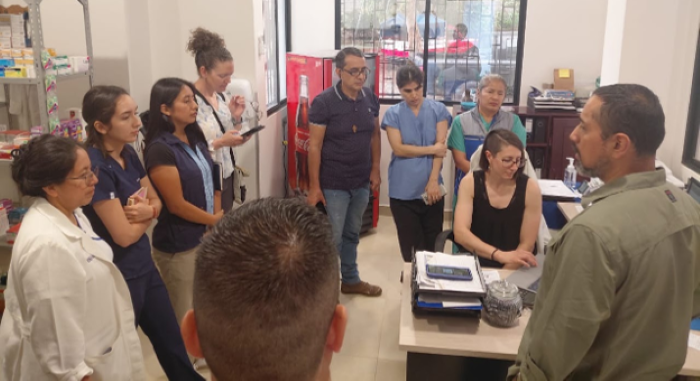 TWB team training the Hombro a Hombro Clinic staff on the use of the CMES mini computer.
Latacunga: At the Cotopaxi Solidario Clinic, we upgraded existing hardware and provided a training lecture on hypertensive emergencies. This session was carefully tailored to the specific types of patients the local staff treats in their clinic.
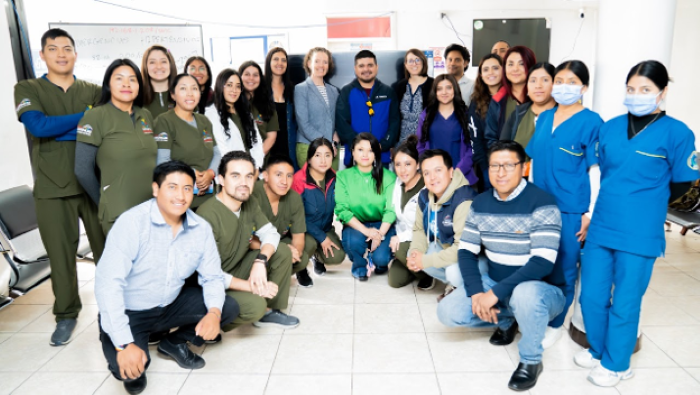 Cotopaxi Solidario Clinic staff with the TWB team.
Tena: The TWB team traveled to the Sumak Kawsay Wasi Clinic to perform upgrades and teach the basics of POCUS. The clinic is acquiring its first ultrasound machine this year, and the staff was incredibly enthusiastic about learning ultrasound-guided IV placement and requested that the TWB team return for additional hands-on training once their machine arrives. Staff were educated about the abundance of CMES materials available to reinforce their knowledge.
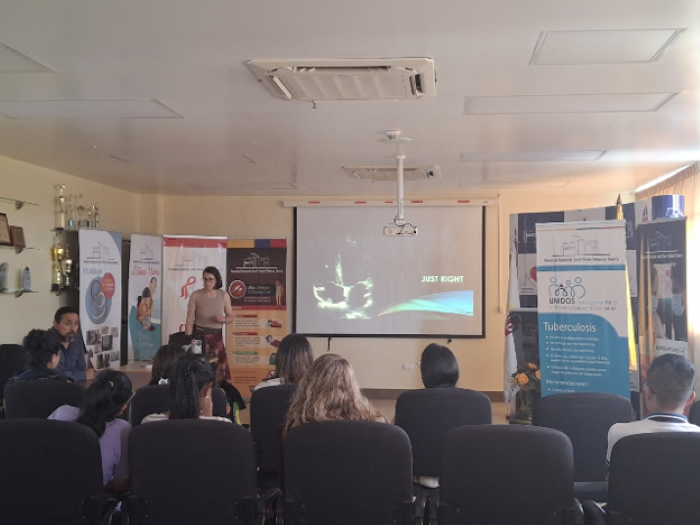 POCUS lecture by Dr. Jessica Pelletier at Sumak Kawsay Wasi Clinic.
Misahualli: The trip concluded at a rural clinic—Centro de Salud Misahualli—serving a primarily indigenous community. While our focus here was strictly on technological infrastructure, upgrading their older system to a new video-capable device ensures they now have access to our full suite of visual medical training tools.
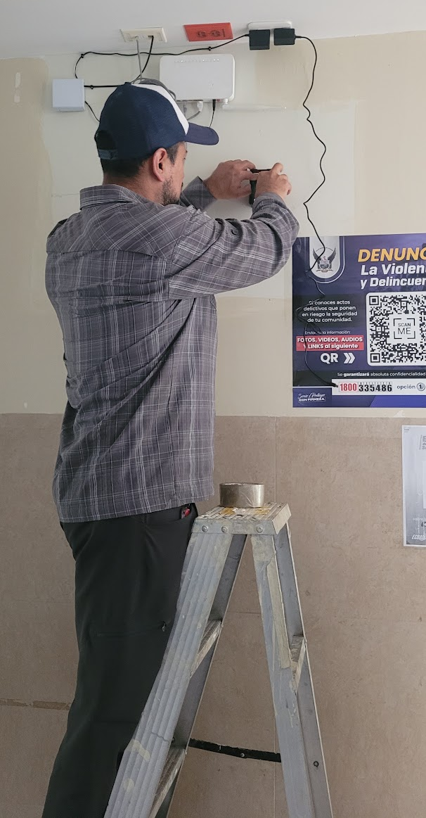 Pablo Boada, Latin America Coordinator, connecting the CMES-Pi to the clinic's Wi-Fi at Centro de Salud Misahualli to provide easier accessibility.
At the conclusion of each clinic visit, site staff were invited to join the WhatsApp groups created specifically for their sites, where they can contact TWB at any time regarding information technology issues. These individual groups are also used to share announcements about free Spanish-language webinars, and all communication occurs in Spanish. By joining their individual clinic WhatsApp groups, clinicians also become members of the CMES Global Community, where thousands of healthcare workers at partner sites around the world receive announcements about free learning and scholarship opportunities. In this way, TWB’s Ecuadorian partners were inducted into a global virtual community of practice2 focused on sharing up-to-date medical knowledge.
A Vision for the Future: Expanding Our Footprint
TWB’s journey in Ecuador is a powerful reminder of the impact that accessible education can have on frontline healthcare. The team plans to return to Ecuador next year to continue POCUS education initiatives and re-engage with partner sites to assess their evolving needs for Spanish-language CMES content.
As we aim to expand our footprint throughout Latin America, TWB is actively building a volunteer team dedicated to creating tailored Spanish-language materials. In an exciting technological step forward, TWB is currently utilizing the artificial intelligence tool NotebookLM to convert peer-reviewed emergency medicine chapters—donated from EM:RAP's Corependium—into brief, accessible Spanish-language videos, which have already been very well received by our users.
By combining innovative technology with targeted, on-the-ground clinical training, TWB is empowering local healthcare providers and elevating the standard of global emergency medicine, one clinic at a time.
References