 American College of Emergency Physicians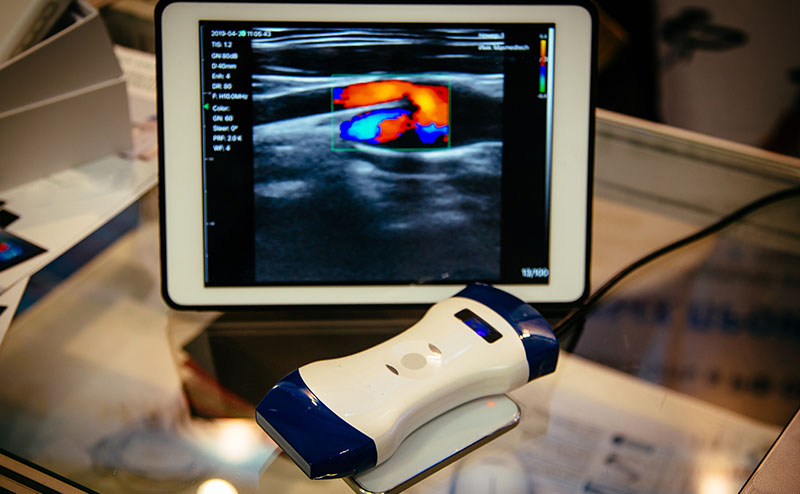

The pocket Revolution: Handheld POCUS in Undergraduate Medical education
Matt Lohse, MD
Baylor Scott & White Medical Center/Baylor College of Medicine-Temple
Emily Lovallo, MD
University of Pittsburgh School of Medicine
Daniel Mirsch, DO, FACEP, FPD-AEMUS
State University of New York at Buffalo, Jacobs School of Medicine and Biomedical Science
Sarah Sommerkamp, MD
University of Maryland School of Medicine
The integration of handheld Point-of-Care Ultrasound (POCUS) devices has quickly become a core component of undergraduate medical education (UME). A recent panel of expert ultrasound educators, hosted by the ACEP Emergency Ultrasound Medical Student Subcommittee, shared critical insights on scaling programs, managing resources, and overcoming administrative barriers.
For those of us on the front lines of POCUS education, the discussion provided valuable best practices and hard-won lessons on successfully integrating handheld devices into our medical school curricula.
Strategy 1: Scaling Education Through Strategic Investment
The primary driver for handheld adoption is often simple: cost and feasibility. As one director noted, handhelds can be a fraction of the cost of cart-based systems, securing essential administrative buy-in. Once purchased, however, a clear strategy is needed to maximize their educational impact across large student cohorts.
💡 Key Takeaways on Program Scaling:
- Parallel Faculty Development:Scaling to an entire class requires a deep roster of educators. One institution is using their initial handheld device purchase primarily for faculty education boot camps—training clinical skills preceptors from various departments (not just EM) in parallel with student instruction.
- Leverage Asynchronous Learning:Handhelds excel at facilitating independent, asynchronous practice. Combined online resources allows faculty to assign pre-session modules (eg, via Butterfly Academy or other free, open-access online resources) and free up valuable in-person time for more high-yield, hands-on skill-building.
- The Student-as-Trainer Model:To manage large classes with a small core faculty, cultivate a POCUS Club or a Teaching Assistant (TA) program. Train the top 10-20% of interested students to lead structured scan sessions, create certificate programs and competency assessments to effectively expand your instructional footprint without increasing faculty hours.
🛠️ Strategy 2: Overcoming Operational and Administrative Barriers
The largest hurdles are rarely educational—they are logistical and administrative. These challenges must be addressed preemptively to prevent program burnout.
🛑 The "Clinical Wall" (PHI & Liability)
The panel strongly concurred: do not plan on using educational probes for clinical scanning.
- The Problem:Devices purchased by the medical school are typically not maintained by Hospital Biomed departments, are not integrated with the EHR (Cerner/Epic), and pose complex PHI (Patient Health Information) liability issues. Explore limitations early before building your curriculum to understand and anticipate barriers to pre-clinical and clerkship integration.
- The Solution:Focus on educational use only and seek to piggyback off clinical licenses where possible. If your affiliated health system implements a middleware solution (like QPath or Compass) for their clinical POCUS, advocate for the medical school to receive free or discounted educational user licenses. This can provide essential cloud storage for scan portfolio tracking and account management capabilities.
📚 The Loaner Dilemma (To Check Out or Not to Check Out)
Lending a $3,000+ device to a student presents a clear risk.
|
Approach |
Best Practice |
Key Mitigation |
|
Controlled Borrowing |
Partner with the Health Sciences Library. Kits are checked out like any other library item for a short, fixed period (eg, 3 hours). |
Devices must not leave the building and are covered by a student responsibility/consent form. |
|
Dedicated Scan Lab |
Implement twice-weekly faculty/sonographer-led "Open Office Hours" or voluntary scan sessions. Probes remain secured in the simulation center. |
Ensures devices are supervised, charged, and available, though it limits independent practice time options. |
🔋 Resource Management: Charging, Inventory, and Maintenance
- The "Spaghetti" Solution:Invest in dedicated charging carts (often cheaper alternatives to vendor-branded solutions). These organize devices and prevent overloading electrical breakers by cycling charge times.
- Centralized IT Management:Avoid burdening your team with updates. If possible, have your institutional IT or Operations staff manage software/app updates for all iPads/probes a few hours before large sessions.
- Address the Unforeseen:Be prepared to become a "laundromat manager." The sheer volume of towels and linens for a large class is immense—plan for a dedicated process (or budget for disposable coverings). Partner with sim center or standardized patient programs to include washcloths or hand towels in larger order to keep costs down.
⏳ The Critical Ask: Optimizing Instructional Time
The most common operational pitfall cited by the panel was the low yield of mandatory, unstructured pre-work and the constraints of time.
- Maximizing Sessions:If you are restricted to 1-hour session blocks with a high student-to-probe ratio (eg, 7:1), advocate to stretch sessions to 90 minutes. That extra 30 minutes is critical for hands-on rotation and fine-tuning image acquisition on complicated views like cardiac.
- Focus Faculty Effort:If students are struggling with anatomy visualization, integrate scanning inanimate objects early in the curriculum to reinforce physics and image-to-object translation. Save faculty-led time for interpretation, pathology, and optimizing acquisition technique, not basic button-pushing.
The integration of handheld devices has ushered in a new era in ultrasound education. By anticipating these operational, financial, and administrative challenges, ultrasound educators can ensure the handheld revolution truly elevates the POCUS competency of future physicians. Future sessions will focus on exploring operational aspects of programs currently employing a 1:1 student:device ratio or similar.