 American College of Emergency Physicians

Recap and Review: 2nd Annual ACEP Ultrasound Section Fellow Speakers Symposium
Trent She, MD, FACEP
Hartford Hospital, University of Connecticut
Javi Andrade, MD
Abrazo Health Emergency Medicine
Jonathan Brewer, MD, FACEP
Baylor University Medical Center, Texas A&M University College of Medicine
Sandy Werner, MD, FPD-AEMUS, FACEP
MetroHealth Medical Center, Case Western Reserve University
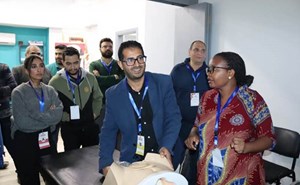
The ACEP Ultrasound Section Fellowship Education Subcommittee recently held its second annual Fellow Speaker Symposium — the culmination of a six-month program that prepares fellows to deliver a national-level talk through mentorship with a recognized ultrasound expert from outside their home institution. The overall goal was to expand the mentorship network for emergency ultrasound fellows and to give fellows a chance to work with a content expert that they otherwise may not have the ability to meet or work with. We solicited applications nationally from any current emergency ultrasound fellows. Each fellow submitted a content interest area, which we used to match them with a mentor who specializes in that field. This year, we paired 11 fellows with 11 mentors.
All fellows met a number of times with their assigned faculty to discuss their ultrasound interests, select a specific topic, receive coaching and craft a 10-minute TED-like talk to give at the symposium. Fellows were given feedback from our judging panel both contemporaneously and after the symposium ended. A panel of judges evaluated the fellows on content, organization, delivery, slides, time management, knowledge and expertise, clarity and professionalism. The winning speaker will present at the ACEP EUS Section Meeting at ACEP26 in Chicago.
|
Our Fellows |
Our Faculty |
|
Aaron Cain |
Christopher Thom |
|
Christine Donat |
Matthew Lipton |
|
Courtney Smith |
Juana Nicoll Capizzano |
|
Heather Molvik |
Michael Gottlieb |
|
Irini Agaraj |
Daniel Brenner |
|
Jeannie Kuang-Nguyen |
Michael Danta |
|
Jinx Lioi |
Matthew Pyle |
|
Lachlan Driver |
Matthew Riscinti |
|
Nicole Sales |
Michael Jones |
|
Ochan Kwon |
Curtis Xu |
|
Philippe Ayres |
Jordan Rupp |
Our Judges:
- Di Coneybeare, MD, MHPE, FPD-AEMUS, Columbia University Medical Center, Vagelos School of Physicians and Surgeons
- Meera Muruganandan, MD, Boston Medical Center, Boston University
- Megan Hilbert, MD, FACEP, University of Utah
- Frances Russell, MD, Indiana University
Below are some quick lecture objectives from our extraordinary 11 fellows and mentors.
“From Probe to Payment: Reducing Revenue Loss in Your Ultrasound Program”
Speaker: Aaron Cain, MetroHealth Medical Center
Mentor: Christopher Thom, University of Virginia
Timestamp in Recording: 4:29
- Understand the building blocks for ultrasound reimbursement.
- Identify areas where programs often lose out on reimbursement for ultrasounds that are performed.
- Provide a framework for ultrasound divisions to use in their departments.
“uJVP: Untapped Potential”
Speaker: Christine Donat, Yale University
Mentor: Matthew Lipton, Vanderbilt University Medical Center
| 2nd Place, Judges’ Vote |
Timestamp in Recording: 16:32
- Explain the evidence supporting the use of ultrasound for JVP measurement
- Describe the technique for ultrasound JVP measurement
- Explain clinical scenarios in which ultrasound JVP measurement may be helpful
“Closing Diagnostic Disparities with Ultrasound in Rural Emergency Departments”
Speaker: Courtney Smith, Washington University in St. Louis
Mentor: Juana Nicoll Capizzano, University of Michigan
Timestamp in Recording: 27:10
- Identify operational barriers to implementing POCUS programs in rural hospitals and discuss feasible strategies to overcome them.
- Demonstrate how POCUS use can reduce unnecessary imaging, streamline patient flow, and optimize resource utilization in low-volume settings.
- Discuss models for sustainable ultrasound education and skill maintenance for providers practicing in rural or critical access hospitals.
- Evaluate the role of POCUS in supporting equitable, high-quality emergency care for low-SES and geographically isolated populations.
“Engaging Residents in Quality Assurance: An Application of Self-Determination Theory”
Speaker: Heather Molvik, Columbia University Medical Center
Mentor: Michael Gottlieb, Rush University Medical Center
Timestamp in Recording: 39:37
- Involving residents in QA fosters autonomy, competence, and relatedness (the self determination theory)
- Anecdotes from my own experience and literature review
- Goal of inspiring at least 5 members of the audience to consider implementing or advocating for similar resident engagement in their programs within the following couple of years.
“Beyond Borders: Building Lasting Impact in Global Ultrasound Through Collaboration”
Speaker: Philippe Ayres, Denver Health
Mentor: Jordan Rupp, Vanderbilt University Medical Center
Timestamp in Recording: 48:30
- Describe key strategies for creating sustainable ultrasound education programs in global health settings
- Identify two ways telemedicine and AI can optimize ultrasound education and care delivery in austere environments
- Explain how limited manpower in global health settings creates barriers to durable ultrasound programs and evaluate how innovative technologies (AI, tele-ultrasound, remote QA) can help close this gap
- Develop an actionable plan to enhance the long-term impact of short-term teaching initiatives through mentorship, remote collaboration, and technology integration.
“Meat Models: A High-Fidelity Approach to Ultrasound-Guided Nerve Block Education”
Speaker: Ochan Kwon, Maimonides Medical Center
Mentor: Curtis Xu, Yale University
| 1st Place, Judges’ Vote |
Speaker is invited to lecture at ACEP26 Scientific Assembly in Chicago, IL
Timestamp in Recording: 1:01:51
- Enable any residency and fellowship program to create high-fidelity meat models to teach ultrasound-guided regional anesthesia (UGRA) by sharing the necessary expertise and know-how.
- Increase the number of residency and fellowship programs using meat models to teach UGRA, which can be measurable through a national survey.
- Enable any residency and fellowship program to create these meat models using supplies that are both affordable and readily available. The assembly of these models is uncomplicated and easy to perform.
- Share the knowledge needed to create meat models that accurately mimic a wide variety of nerve blocks and enable more physicians to perform these blocks in the ED. UGRA is a safe, alternative way to treat pain that can provide targeted pain relief in the ED while avoiding the risks of systemic analgesics
- Provide the expertise and knowledge needed to enable more residencies and fellowship programs to use meat models for high-fidelity UGRA education within the next year.
“Where Is the Dreaded... CBD?”
Speaker: Jeannie Kuang-Nguyen, HCA Florida Kendall
Mentor: Michael Danta, Yale University
Timestamp in Recording: 1:24:58
- New POCUS users often struggle to identify the CBD on RUQ ultrasound. This talk will walk through techniques for locating the CBD and use multiple annotated images to build familiarity with the relevant sonoanatomy
“Why We Should Not Do Nerve Blocks in the ED”
Speaker: Lachlan Driver, Brown University
Mentor: Matthew Riscinti, Denver Health
| 3rd Place, Judges’ Vote; Most Popular Lecture (Audience Vote) |
Timestamp in Recording: 1:37:00
- Summarize current evidence on the two adjuncts most commonly used in emergency department peripheral nerve blocks—dexamethasone and epinephrine—focusing on their impact on block duration, analgesic effectiveness, and clinical relevance; compare real-world utilization patterns and outcomes associated with these adjuncts across multiple EDs using NURVE Registry data to identify practice variability and gaps in evidence translation
- Evaluate the safety profile of dexamethasone and epinephrine by assessing complication rates, monitoring interventions, and block failures using standardized registry metrics
- Develop a concise, data-driven adjunct selection algorithm tailored to ED workflows, patient populations, and resource constraints; and recommend priorities for future ED-focused adjunct research and quality initiatives that can inform and improve national practice standards
“To Block or Not to Block: Transgluteal Sciatic Nerve Block vs. Hydrodissection”
Speaker: Nicole Sales, UConn Health/Hartford Hospital
Mentor: Michael Jones, Virginia Commonwealth University
Timestamp in Recording: 1:48:15
- Identify indications for transgluteal sciatic nerve block (TGSNB)
- Differentiate between TGSNB and hydrodissection
- Discuss possible challenges in the ED and complications
“Beyond the Emergency Department in Global Health: Which Chronic Diseases Can Be Diagnosed and Monitored with Point-of-Care Ultrasound?”
Speaker: Jinx Lioi, University of Arizona
Mentor: Matthew Pyle, Jackson Memorial Hospital/University of Miami
Timestamp in Recording: 2:00:38
- List the leading causes of disability adjusted living years worldwide.
- Discuss which causes of disability adjusted living years worldwide can be diagnosed and monitored with Point of Care Ultrasound
- Review scan techniques and notable findings in
- Abdominal ultrasound for chronic liver diseases and malarial infections
- Echocardiography for complications of rheumatic fever.
- HIV protocols and opportunistic infections
- OB ultrasound to predict likelihood of pre-term labor or labor complications
- Renal and ophthalmic ultrasound for the sequelae of diabetes
“The Wonderful World of Regional Anesthesia: A New Spell for Shoulder Pain”
Speaker: Irini Agaraj, Yale University
Mentor: Daniel Brenner, Indiana University
Timestamp in Recording: 2:12:26
- Compare the applicability and safety of the different ultrasound-guided nerve blocks available for treating shoulder pain in the emergency department
- Review the literature on interfascial plane block use in the emergency department
- Discuss the unique advantages of using the interfascial plane block and review the targeted nerves (axillary and musculocutaneous)
- Identify the clinical indications for the interfascial plane block and discuss how to integrate it into multi-modal pain control
- Describe the procedural steps and anesthetic considerations to perform the block
Here’s a video link to the entire symposium recorded: ACEP US Fellow Speaker Symposium 2026 Recording.mp4