 American College of Emergency Physicians

What Uganda Taught Me About the Power of POCUS
Vanessa Guillen, MD
Ultrasound Fellow, Eisenhower Medical Center
Ami Kurzweil, MD
Fellowship Director, Eisenhower Medical Center
Keywords: Ultrasound Fellowship, POCUS, Global Medicine, Pocket Ultrasound
In February 2026, I traveled to Uganda as part of the Ultrasound fellowship at Eisenhower Medical Center’s Global Medicine curriculum in partnership with Bridge to Health Medical and Dental, a nonprofit organization dedicated to providing healthcare services and medical education to vulnerable communities. The mission combined direct patient care with POCUS education, creating an opportunity to deliver immediate diagnostic services while helping build sustainable local healthcare capacity.
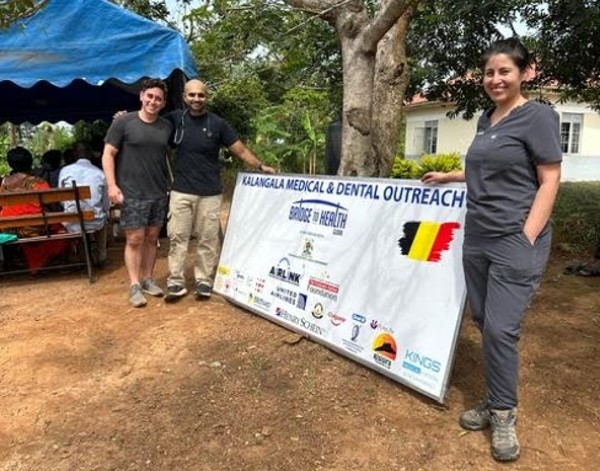 Image 1: Ami Kurzwei, MD., Chintan Harish Kumar, MD, and Vanessa Guillen, MD. Eisenhower Medical Center Ultrasound Fellowship team
I chose an ultrasound fellowship with a global health component because it brought together two of my greatest passions: medicine and travel. When I joined the ultrasound fellowship at Eisenhower Health, I knew that a trip to Uganda would be part of the experience. I expected long days, a high patient volume, and the opportunity to practice medicine in a resource-limited setting. What I did not expect was how profoundly the experience would reshape my understanding of POCUS.
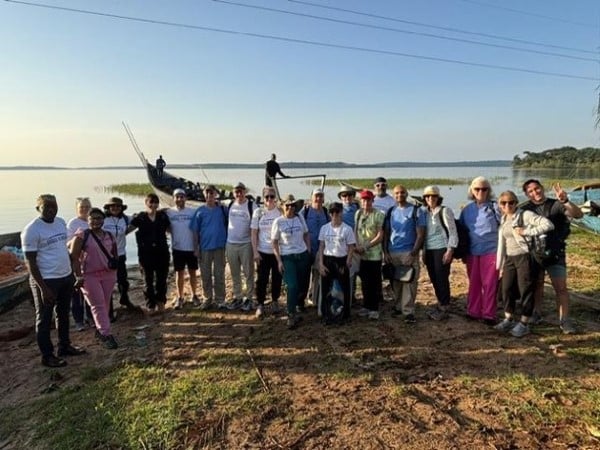 Image 2: Bridge to Health Medical and Dental Volunteers in front of the boat used to get across Lake Victoria.
Uganda greeted us with remarkable beauty. We stayed near the shores of Lake Victoria, surrounded by lush tropical greenery unlike anything I see in Southern California. Each day brought a new clinical environment. One morning, we found ourselves providing care under a tarp at a local prison after heavy rains prevented travel to a nearby island clinic. Another day involved a four-hour round-trip boat ride to an island community where access to medical care was limited, and imaging was nearly nonexistent. In Uganda, flexibility was not optional—it was simply part of the practice of medicine.
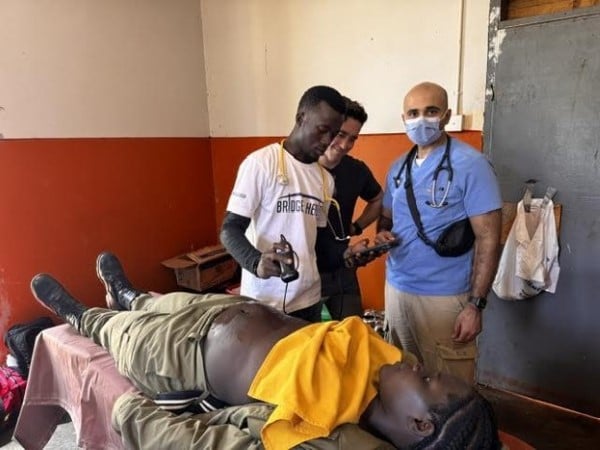 Image 3: Members of the Eisenhower Medical Center Ultrasound Fellowship with Ugandan Medical student performing an OBGYN scan
One of the most memorable days of the trip was spent performing obstetric ultrasounds on an island community. My co-fellow and I spent nearly ten hours scanning pregnant women, many of whom had never received an ultrasound during their pregnancy. In many of the Ugandan rural communities, access to prenatal imaging remains limited, making even a single ultrasound examination a meaningful event in a patient’s pregnancy. At first, many of the women appeared understandably reserved. Language barriers required local medical students to translate, and initial interactions were often quiet. But the moment they saw their baby on the screen, everything changed. Smiles appeared. Laughter followed. Family members gathered around. Watching patients see their unborn child for the first time was a reminder that ultrasound does far more than provide diagnostic information—it can create connection, reassurance, and joy. This work aligns closely with the United Nations Sustainable Development Goal 3: Good Health and Well-Being, particularly Target 3.1, which seeks to reduce global maternal mortality.
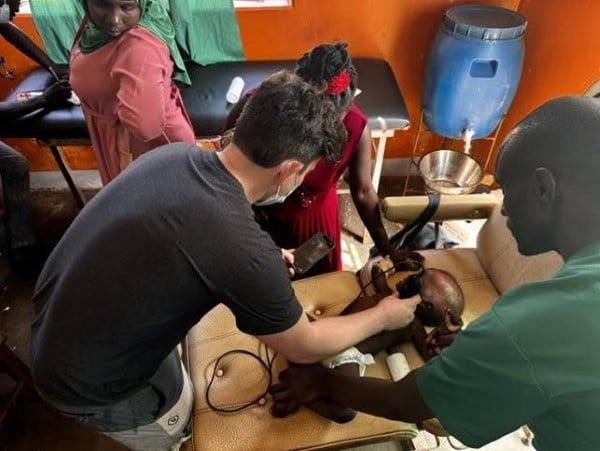 Image 4: Ami Kurzweil, MD. Scanning a pediatric patient for cardiac pathology
Throughout the trip, handheld ultrasound devices were used to evaluate a wide range of medical conditions encountered in the outreach clinics. Cardiac assessments helped clarify symptoms, gallstone disease was identified and referred for surgical evaluation, and bedside imaging was frequently supplemented by physical examination findings. These efforts also support Sustainable Development Goal 3, specifically Target 3.4, which aims to reduce premature mortality from non-communicable diseases through earlier diagnosis and treatment. The portability, affordability, and diagnostic capability of modern pocket ultrasound systems make them uniquely suited for resource-limited environments where access to radiology services may be unavailable.
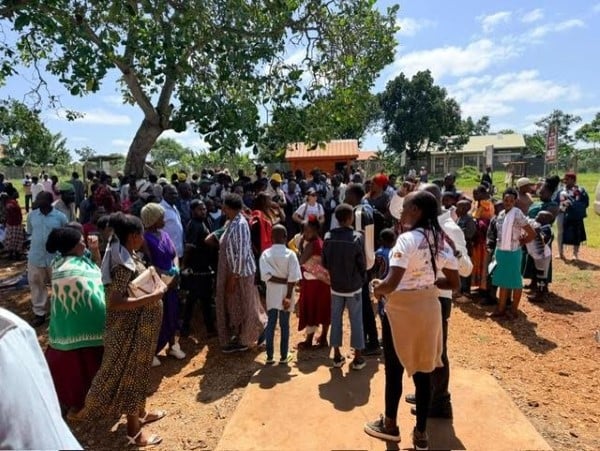 Image 5: Locals of all ages waiting in line to be triaged.
One patient who stood out was a young hotel employee who had been helping care for our group throughout the week. Near the end of the trip, Bridge to Health hosted a clinic for hotel staff members. He presented with months of chest discomfort. After reviewing his symptoms and prior testing, his presentation was more consistent with H. pylori infection than a primary cardiac condition. I performed a focused cardiac ultrasound, which showed no concerning findings. While the scan itself was straightforward, his reaction stayed with me. Because we had interacted throughout the week, there was already a sense of familiarity and trust. Being able to show him his own heart and explain the findings visually seemed to provide reassurance in a way that words alone could not. It was a reminder that ultrasound is not only a diagnostic tool; it can also strengthen the physician-patient relationship.
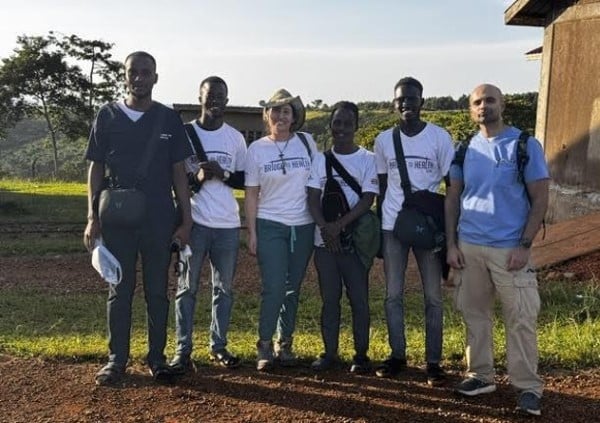 Image 6: Ugandan medical students with Vanessa Guillen, MD. and Chintan Harish Kumar, MD
Perhaps the most meaningful lesson came from working alongside Ugandan medical students. Every morning, we held teaching sessions, discussing clinical cases and building differential diagnoses together before heading into the clinic. We taught POCUS throughout the trip, and the students eagerly practiced on one another and on patients. Their enthusiasm was infectious.
What struck me most was seeing the lasting impact of these educational efforts. Several students had been involved with the organization for years and continued performing ultrasound examinations long after previous volunteer teams had departed. Two students, Simon and Jerry, were already traveling independently to clinics and performing obstetric ultrasounds. One had identified a placenta previa, allowing the patient to receive appropriate follow-up care. That moment crystallized something important for me: the true value of global ultrasound education is not the scans we perform during a single trip. It is the knowledge and skills that remain after we leave.
Before Uganda, I often thought of point-of-care ultrasound primarily as a tool that helped emergency physicians make rapid decisions—who could be discharged, who needed admission, and who required urgent intervention. After Uganda, I came to appreciate a broader role for ultrasound. In resource-limited communities, it can provide access to diagnostic information that might otherwise be unavailable. It can help patients receive care sooner. It can create moments of reassurance and understanding. And when paired with education, it can empower local clinicians to continue improving care within their own communities.
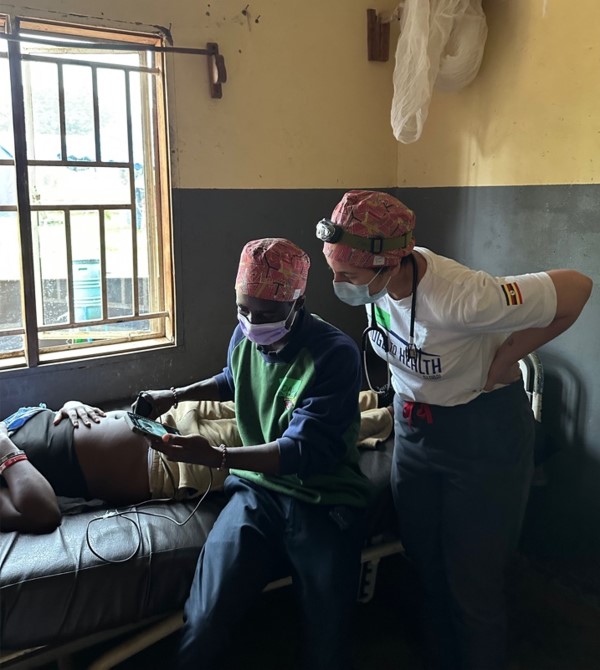 Image 7: Vanessa Guillen, MD. and medical student scanning
Global health experiences should never be only about a visiting team providing temporary care. The most sustainable impact comes from education, collaboration, and investing in local healthcare providers. Point-of-care ultrasound is uniquely suited to this mission. Portable devices, combined with dedicated teaching, allow knowledge to spread far beyond a single clinic day.
As an ultrasound fellow, Uganda challenged me clinically, broadened my perspective, and reinforced why I chose this specialty. The scans themselves were important, but the relationships, teaching, and shared commitment to improving patient care were what left the deepest impression. Long after the boat rides, the clinic days, and the hours spent scanning patients have faded into memory, those lessons will remain.
Resources
Bridge to Health Medical and Dental. Bridge to Health. Accessed June 9, 2026. https://www.bridgetohealth.ca/
United Nations Department of Economic and Social Affairs. Goal 3: Good Health and Well-Being. Accessed June 9, 2026. https://sdgs.un.org/goals/goal3