 American College of Emergency Physicians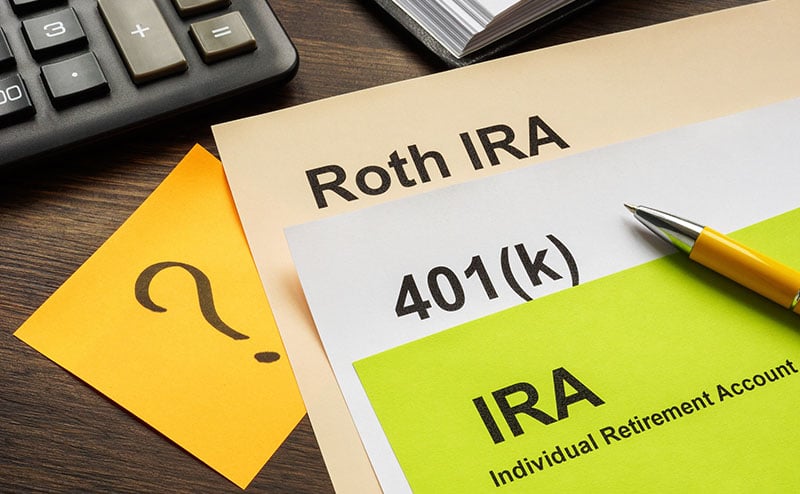

Early Returns
Aaron Snyder, MD
Traditional or Roth: When to Pay Your Taxes
A newly hired attending physician heard I have a personal interest in finance and retirement accounts. She was completing her benefits enrollment and had questions. Our employer offered both traditional and Roth 401(k) options. The HR representative told her to pick one but could not provide guidance on which made sense for her situation.
She asked me the difference. I explained that traditional contributions reduce her taxes now, while Roth contributions have tax consequences now and provide her with tax-free money in retirement. She paused, then asked the question almost every physician asks: Which one should I choose?
The answer depends entirely on when you want to pay taxes on your retirement money. Pay now or pay later? That choice determines whether you save thousands or lose thousands over your career. It is quite a personal choice.
What the Difference Actually Means
Traditional 401(k) contributions use pre-tax dollars. The word traditional may not be included in your paperwork. 401(k) and traditional 401(k) are the same thing. The term Roth is the designation you should look for.
Traditional retirement money comes out of your paycheck before taxes are calculated. If you earn $300,000 and contribute $24,500 to a traditional 401(k), the IRS only taxes you on $275,500. For a single filer, that $24,500 contribution saves you roughly $8,575 in federal taxes immediately because those dollars would have been taxed at your marginal rate of 32%. If you earn $500,000 as a single filer or have joint income above $600,000, you move into the 35% bracket and save even more per dollar contributed.
The tradeoff comes later. When you withdraw that money in retirement, you pay ordinary income tax on every dollar. Ordinary income tax means the same progressive tax rates that apply to your salary. Both your original contributions and all the growth get taxed. If you withdraw $100,000 from a traditional 401(k) in retirement and you are in the 24% tax bracket, you pay $24,000 in taxes and keep $76,000.
Roth 401(k) contributions work opposite. You pay taxes on your full salary first, then contribute after-tax dollars. That $24,500 Roth contribution provides no tax savings today. Your taxable income stays at $300,000. But every dollar you withdraw in retirement comes out completely tax-free. No taxes on your contributions. No taxes on decades of growth. You withdraw $100,000 from a Roth 401(k) and you keep the entire $100,000.
The Tax Bracket Bet You Are Making
The traditional versus Roth decision involves several questions. Will your tax bracket be higher now or in retirement? What will tax brackets be in the future compared to now? What kind of income will you be drawing in retirement: ongoing earned income from part-time work, retirement account withdrawals, Social Security, pensions, or rental income? Predicting your future financial situation is complex and uncertain.
The traditional argument assumes you will be in a lower tax bracket in retirement. A single filer earning $300,000 now pays taxes in the 32% marginal bracket. In retirement, if you withdraw $150,000 annually from retirement accounts, you pay taxes in the 24% marginal bracket. On a $300,000 salary, you pay roughly $74,500 in federal taxes. On $150,000 of retirement withdrawals, you pay roughly $28,800. Saving taxes at 32% now and paying them at 24% later creates meaningful savings, assuming tax brackets stay the same.
But this assumption breaks down for aggressive savers. If you max out retirement contributions for 30 years, your retirement account balances might exceed $5 million. Required minimum distributions, or RMDs, are mandatory withdrawals you must take from traditional retirement accounts starting at age 73. These RMDs alone could push you into the same or tax brackets higher than you occupied during your working years. Worse, tax rates might increase. Federal marginal rates are near 40-year lows and national debt is at all-time highs. Unfortunately, as high-income earners and aggressive savers, we will likely be lumped into the category of those who can afford to pay more.
Roth contributions lock in today's tax rates. You pay taxes now and guarantee that everything coming out in retirement is tax-free, regardless of what Congress does with tax rates over the next three decades. That certainty has real value.
The Hidden Math That Changes Everything
Most traditional versus Roth comparisons assume you invest the tax savings from traditional contributions. If you contribute $24,500 to a traditional 401(k) and save $8,575 in taxes, the traditional option only wins if you actually invest that $8,575 somewhere else. If you spend it on lifestyle expenses, the Roth comes out ahead.
Suppose you contribute $24,500 annually to either a traditional or Roth 401(k) for 30 years. Both accounts invest identically and earn 6% annual returns. Both grow to roughly $1.94 million. But the traditional 401(k) balance is fully taxable while the Roth balance is completely tax-free.
If you withdraw $1.94 million from the traditional 401(k) over time and pay 24% taxes in retirement, you keep $1.47 million. You withdraw $1.94 million from the Roth 401(k) and keep the entire amount. The Roth delivers $465,000 more spendable money. This is simplified because the amount you withdraw can vary year to year and the balance will change as investments grow or diminish, but the principle holds.
Most physicians do not invest the annual tax savings. They spend them on current lifestyle, which makes the Roth mathematically superior.
What I Actually Do
In the past, I have contributed to both traditional and Roth retirement accounts. As a contractor, I created a SEP IRA and performed mega backdoor Roth conversions in my early career. We will discuss Roth conversions in future editions, I promise. As a W-2 employee, I contributed solely to Roth 403(b) accounts. As a contractor again, I now contribute part of my retirement to the Solo 401(k) and another part to a Roth Solo 401(k). I am hedging my retirement. I will have some money in the pre-tax accounts that I will draw on first. This will allow my Roth accounts to grow another 10 or more years. One day I hope to work part-time, where my annual income will be substantially lower. This lower tax bracket will allow me to perform Roth conversions at a lower rate, hopefully.
Each year my wife and I are in the 32% to 35% federal marginal bracket. I am fortunately able to afford the current tax burden without impacting our family lifestyle. I believe tax rates will be higher in 30 years than they are today. I value the certainty of knowing exactly how much money I will have in retirement without worrying about unknown future tax rates.
How to Make Your Own Decision
Traditional contributions make sense if your current marginal tax bracket is high, you expect to be in a significantly lower bracket in retirement, and you will actually invest the tax savings rather than spending them. Roth contributions make sense if you can afford the current tax burden, you expect tax rates to stay the same or increase, you value tax certainty, or you know you will not invest the tax savings from traditional contributions.
You can also split your contributions. Many physicians contribute 70% traditional and 30% Roth, or 50/50. There is no universal right answer. The decision depends on your current tax situation, your expected retirement spending, and your beliefs about future tax policy.
Over the next two months, we will tackle student loan repayment strategies. Should you pursue Public Service Loan Forgiveness? When does aggressive payoff make sense? How do you balance debt payments with retirement contributions? What about all of the changes with the One Big Beautiful Bill of 2025? These questions cause more stress for early career physicians than almost any other financial topic.